I stand before the flames, the scent of damp earth and ancient stone thick in the air of this hidden Wakasa cave. The fire crackles, a defiant pocket of warmth in the gloom, and at its heart, driven into the stone like a solemn vow, rests a katana. Its blade, sheathed in the dancing light, is not a weapon to be claimed, but a memory to be honored. This is not just a campfire in the land of the rising sun; this is a whisper from Lordran, a ghost in the machine of Assassin’s Creed Shadows. In 2026, as I guide Naoe through the shadows of Sengoku Japan, I find that the most profound discoveries are not secrets of the Brotherhood, but echoes of other worlds, other struggles, forever immortalized in the language of interactive homage.
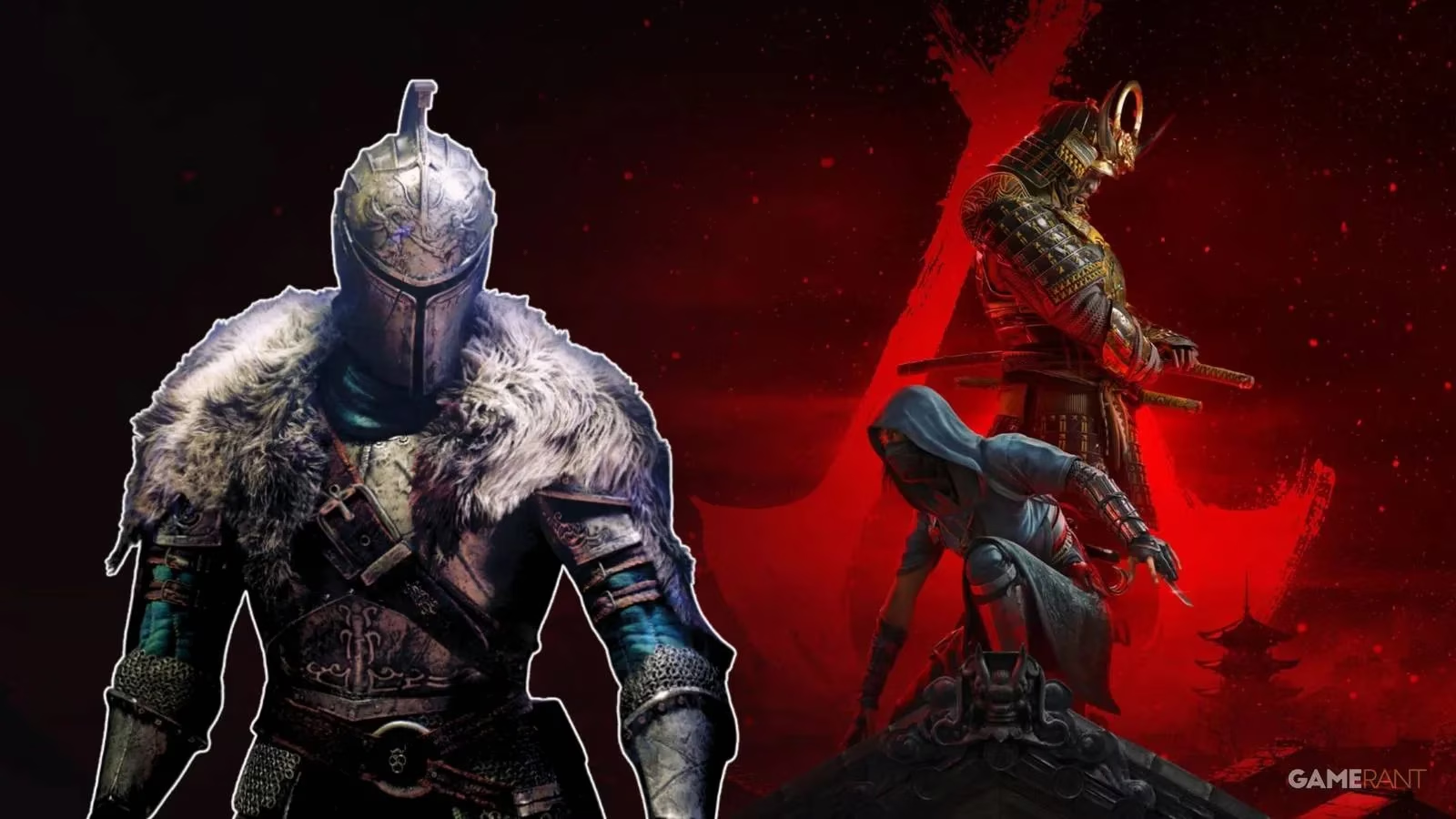
The journey to this moment feels predestined. Since its release, Shadows has captivated not just with its dual tales of shinobi and samurai, but with its deep, almost tactile immersion into a fractured era. It climbed the charts, held its ground, and invited us to lose ourselves in its meticulously crafted world. Yet, beneath the surface of feudal politics and hidden blade assassinations, there thrived a quieter, more universal culture—the culture of the nod, the wink, the shared reference between creators and the well-versed player. We’ve seen these soulslike salutes bloom everywhere, from the irradiated zones of STALKER 2 to the hallowed halls of Hogwarts, a tradition stretching back to Geralt’s own weary rest in Toussaint. But here, in this cave, the tribute feels particularly potent, a confluence of histories both real and digital.
Finding the Undying Flame
-
The Discovery: It was a Redditor, alcridio, who first shared this slice of quiet reverence with the world. A single screenshot, speaking volumes.
-
The Location: Tucked away in the Wakasa region, a place you might easily pass by if not for the pull of curiosity (or a well-marked map).
-
The Function: Unlike some interactive tributes, this bonfire offers only rest. You cannot take the sword. You can only sit, and remember.
This limitation, this denial of possession, is what makes the moment so beautifully melancholic. As a player, my instinct is to collect, to own, to add another trophy to the inventory. Yet, the game gently insists otherwise. The katana is not a tool for Yasuke’s hand or a prize for Naoe’s stealth; it is a monument. It belongs to the flame, and the flame belongs to every weary warrior who has ever sought solace before a checkpoint in a hostile world. The community’s reaction was a mix of wistful disappointment and profound respect. We were, in a way, communing with the undead—not the cursed beings of Lordran, but the undying nature of this iconic imagery itself. "It will never die," they said. And standing here, I believe them.
To understand the weight of this pixelated katana, one must journey back to the original sin—or salvation—of the bonfire. In Dark Souls, these were not mere checkpoints; they were sanctuaries. Hubs of desperate hope in a dying world. The Chosen Undead would kindle the flame, and in that act, carve out a tiny piece of permanence in a landscape designed to erase them. The lore is rich, complex, but the common misconception is poetic: many, including myself for years, saw a sword plunged into the embers. The truth—a decorative fire poker—is almost secondary. The idea of the sword, the sacrifice it implies, the weapon becoming part of the hearth, is what captured our collective imagination.
| Game | Type of Souls Nod | Year of Discovery Trend |
|---|---|---|
| The Witcher 3: Blood & Wine | Interactive Bonfire | ~2016 |
| Hogwarts Legacy | Environmental Detail | 2023 |
| STALKER 2: Heart of Chornobyl | Thematic Element | 2024 |
| Assassin's Creed Shadows | Static, Ceremonial Bonfire | 2025/2026 |
And so, game after game has chosen the myth over the reality, embedding the sword-in-flame into their own tapestries. Shadows does this, but then it adds another layer, a deeper cultural resonance that takes my breath away. The composition—the lone blade amid fire and shadow—doesn't just echo Dark Souls; it vividly recalls a frame from Akira Kurosawa’s Seven Samurai. That 1954 masterpiece, a pillar of cinematic and samurai lore, is itself believed to have been a visual inspiration for Hidetaka Miyazaki’s bonfire aesthetic. So here I am, in 2026, playing a French-Canadian video game set in Japanese history, looking at an object that references a Japanese video game that referenced a Japanese film. The circle is complete, timeless, and utterly mesmerizing.
This cave in Wakasa is now my sanctuary. Not Naoe’s, not Yasuke’s, but mine. As a player moving through a digital 2026, where games are vast and references are our shared lexicon, this quiet Easter egg is a touchstone. It connects my journey through the Sengoku period to every desperate sprint to a bonfire in Anor Londo, to every viewing of Kurosawa’s defending farmers. The katana cannot be wielded, but it can be witnessed. The flame cannot be looted, but it can be remembered. In the end, Assassin’s Creed Shadows offers me more than a new weapon or a region to conquer. It offers a moment of pure, silent poetry—a rest for the digital soul, by a fire that will, indeed, never die. 🔥
For those intrigued by the interplay of gaming and cultural references, exploring how other creative mediums intersect with digital art can be equally rewarding. Whether it's uncovering a hidden gem or staying updated on the latest trends, finding reliable resources is key to enhancing your journey through these experiences.
If you're looking to delve deeper into gaming collectibles, curated merchandise, or even unique finds inspired by iconic titles, DealNest offers a treasure trove of options. Their platform connects enthusiasts with items that celebrate the artistry and innovation behind some of the most memorable gaming moments, making it a great starting point for expanding your collection or knowledge.