As the calendar turned to 2026, the vibrant world of Assassin's Creed Shadows, with its stunning depiction of feudal Japan, continued to captivate players. Yet, a familiar shadow loomed over the experience for many. The game, despite its initial allure, had begun to exhibit the very same symptoms of player fatigue that had plagued its massive predecessor, Assassin's Creed Valhalla. For a significant portion of the community, the expansive map and dense content, once a selling point, had transformed into a daunting checklist. The feeling was not one of discovery, but of obligation. This phenomenon, which some players had hoped Shadows would avoid, had firmly taken root just over a month after its release, leading to widespread discussions about the series' core design philosophy in the modern era.
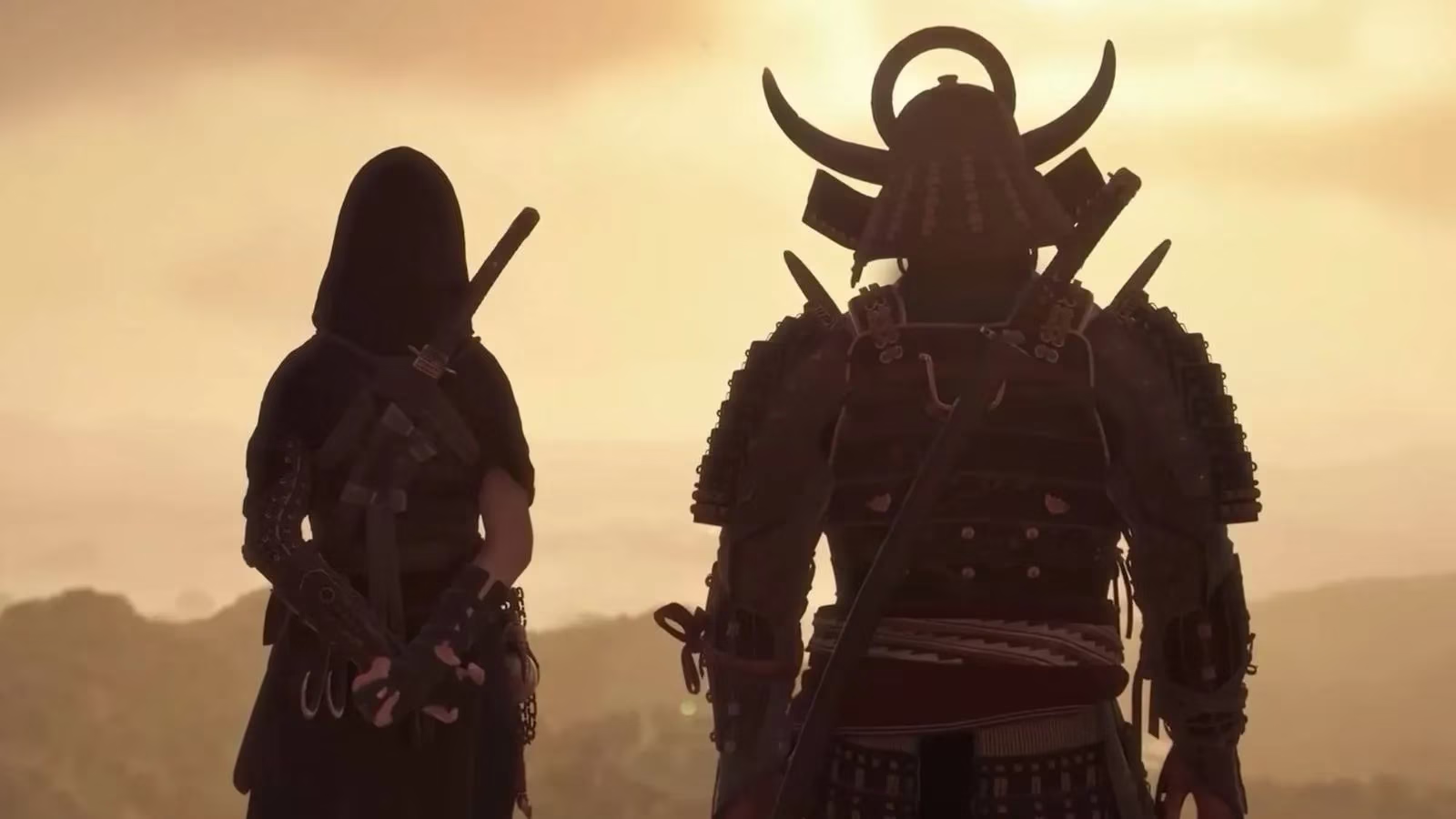
The Echoes of Valhalla: A Recognizable Pattern
The community's sentiment was powerfully summarized by a player known as Jymboh, who described a familiar weariness setting in. They termed it the "Valhalla syndrome," a direct reference to the fatigue experienced by many during the long Viking saga. This feeling became so overwhelming that they ultimately had to stop playing Shadows altogether. In their view, the game's world was initially mesmerizing and held their attention completely. However, the relentless process of clearing the map and progressing through a fragmented narrative made the entire experience feel, in their words, "messy." This wasn't an isolated opinion. Another player, ContributionOk7429, reported hitting a wall of fatigue squarely in the middle of the game's second act. Their disappointment stemmed from a perceived lack of momentum, noting that "nothing notable" seemed to happen during that lengthy segment, causing engagement to plummet.
The Core of the Fatigue: Overwhelm and Repetition
For many, the fatigue didn't stem from a dislike of the setting or characters, but from the systems surrounding them. Player Caesar_TP expressed a feeling that the game eventually devolved into "meaningless slop." The primary culprit? The overwhelming number of markers, icons, and side quests that constantly populated the screen. This design choice, a hallmark of modern Ubisoft open-world games, created a sense of cognitive overload. Instead of organic exploration, players felt they were simply moving from one predefined point to the next, ticking off tasks on a giant, invisible to-do list. Furthermore, a persistent point of contention within the fanbase resurfaced: the move away from tightly crafted, linear narratives. A vocal group of players remained disappointed that the studio had seemingly abandoned the more focused storytelling of earlier entries in the series, favoring a sprawling, player-driven approach that could sometimes feel directionless.
Community-Suggested Countermeasures
Faced with this familiar fatigue, the player community began sharing strategies to reclaim enjoyment from the game. The collective wisdom focused on streamlining the experience to reduce friction and tedium. Popular recommendations included:
-
Enabling Guided Exploration: Turning off the fully immersive exploration mode to have objectives and points of interest clearly marked, reducing time spent wandering aimlessly.
-
Activating Instant Assassinations: Removing the quick-time event (QTE) prompts for stealth kills to make the core fantasy of being an assassin feel more fluid and immediate.
-
Setting Auto-QTEs: For those who found the button-prompt events disruptive, automating them allowed the cinematic moments to play out without interruption.
The goal of these tweaks was unanimous: to make the game feel faster and less like a chore. Beyond settings adjustments, player Garrett_DB offered crucial philosophical advice. They urged fellow fans to practice intentional play—to only engage with activities they genuinely found fun and to take regular breaks. This approach, they argued, was key to curbing the burnout that the game's structure could inadvertently encourage.
A Recurring Chapter in the Creed's History
By 2026, witnessing this cycle repeat itself with Assassin's Creed Shadows was, for many long-time followers of the series, a moment of resigned recognition. The pattern was clear: massive world, abundant content, initial player excitement, followed by a gradual decline into fatigue as the scale outpaces sustained engagement. While the lush landscapes of Japan and the dual protagonists offered a fresh coat of paint, the underlying framework felt intimately familiar. The community's adaptive strategies showed a dedicated player base trying to love the game on their own terms. Yet, the recurring discourse highlighted a fundamental tension in modern blockbuster game design. For a franchise built on historical immersion and narrative, the question persisted: can boundless quantity ever truly coexist with consistent quality and player stamina? As Shadows settled into its post-launch life, that remained its most poignant, unanswered mystery.
This overview is based on reporting and commentary from VentureBeat GamesBeat, whose coverage of live-service cadence, open-world retention loops, and production-scale tradeoffs helps contextualize why players can slide from early awe to mid-campaign burnout in sprawling titles like Assassin's Creed Shadows—especially when icon density, repetitive side objectives, and pacing gaps make progress feel more like workload than discovery.