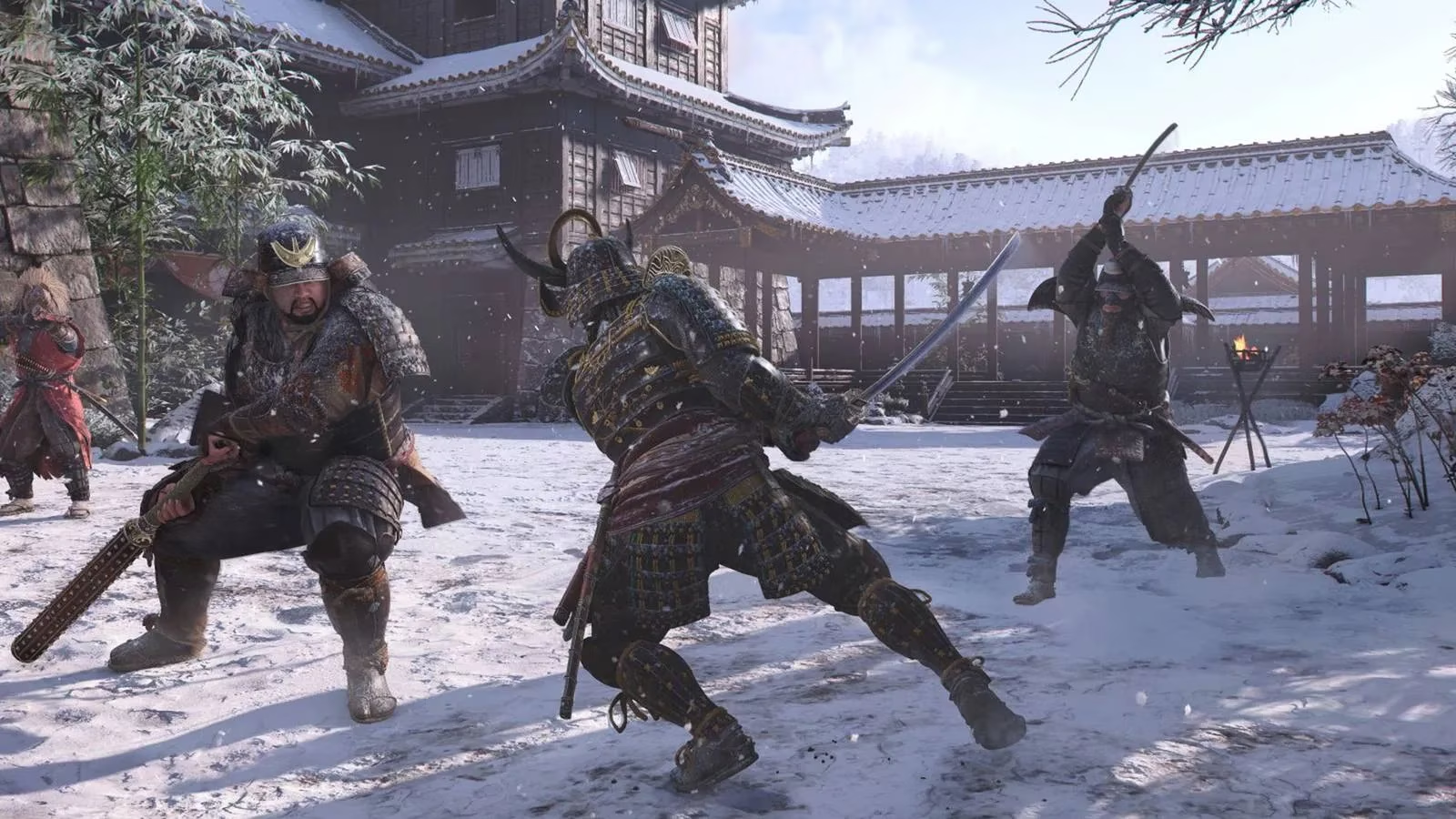
By 2026, Assassin’s Creed Shadows has moved past the launch-window question of whether it can please everyone. The more useful question is how it tries. The answer is a deliberate hybrid. Shadows remains an RPG through and through: a vast 16th-century Japan, level-gated exploration, gear to collect, skill trees to fill, and story branches shaped by dialogue. Yet Ubisoft also added optional bridges back to the older action-adventure template. Canon Mode and instant assassinations are the clearest examples. They do not erase the RPG layer. They let nostalgic players approach it on different terms.
🏯 A Massive RPG With an Older Soul
Players who know Origins or Valhalla will recognize the shape of Shadows immediately. The game drops them into a huge historical playground and ties exploration to a leveling system. There is no shortage of loot. Skill trees invite long-term planning. Dialogue choices let players steer relationships and story outcomes. That is the modern Assassin’s Creed formula, and Shadows may be its best iteration yet.
The key word is balance. Since Origins, Ubisoft has often struggled to keep a fun-filled adventure from buckling under RPG scale. Shadows appears to strike a more confident pose. It keeps the breadth, but it also remembers that Assassin’s Creed was once defined by action-adventure rhythm. The result is not a rejection of the RPG era. It is an attempt to make that era more flexible.
-
🗾 A large 16th-century Japan to explore
-
⚔️ Level-gated combat and enemy pressure
-
🧰 Countless gear pieces and build options
-
🌳 Expansive skill trees for long-term progression
-
🗣️ Dialogue choices that can alter story outcomes
📜 Canon Mode: One Story, No Dialogue Choices
Canon Mode is the boldest olive branch. When enabled, it removes dialogue choices from the entire game. Players experience Ubisoft’s intended story instead of authoring their own version of it. That means many ally and romance options lock down. The appeal is not freedom. The appeal is certainty. Canon Mode shows what these characters actually did in the official narrative rather than what players want them to do. For fans of the older entries, this can feel familiar. Older Assassin’s Creed games told a fixed story. Players followed it. Canon Mode restores that sensation without forcing it on everyone.
The tradeoff is real. Choice-driven players may miss the authorship that modern RPGs provide. But optional design changes the argument. Canon Mode is not a replacement for player agency. It is a second lens. One player can chase personal outcomes. Another can watch the intended drama unfold. That flexibility matters in 2026, when long-running franchises must serve audiences with very different memories of the same series.
🗡️ Instant Assassinations and the Hidden Blade
Instant assassinations target another sore point. In the RPG entries, assassination is not always guaranteed. Armor and higher levels can turn a clean hidden-blade strike into a failed attempt. Shadows offers a toggle that makes the blade lethal again. With it on, the hidden blade becomes the ultimate weapon, much closer to the original games. That is a powerful nostalgia lever. It is also not a stealth skip. Players still need to master approach, positioning, and timing. If they are spotted or lose the initiative, they may never get the chance to use the blade at all. The feature restores the fantasy without deleting the challenge.
⚖️ The Hybrid Approach in 2026
The larger lesson is about audience. Assassin’s Creed has spent years splitting fans between classic stealth-action and expansive RPG. Shadows tries to keep both pockets engaged. Its optional features are small switches with large symbolic weight. They say that the RPG direction is not the only valid future. They also say that classic design does not have to return as a full game to matter. Mirage’s design ethos already suggested Ubisoft was not finished with the older formula. Shadows goes further by embedding pieces of it inside a modern RPG.
| Design layer | RPG-era approach | Shadows hybrid option |
|---|---|---|
| World and progression | Large map, levels, gear, skill trees | Same RPG foundation |
| Story agency | Dialogue choices and branching relationships | Canon Mode removes choices and locks intended outcomes |
| Assassination | Armor and levels can block kills | Instant assassinations restore hidden-blade lethality |
| Stealth | Build-dependent | Still requires positioning and timing |
| Audience | RPG-first players | RPG players plus classic fans |
This is not a perfect unification. Canon Mode sacrifices choice. Instant assassinations could alter encounter design expectations. Yet the intent is clear. Shadows wants the scale of a modern RPG and the pulse of an older Assassin’s Creed. By 2026, that intent reads as a practical blueprint. Ubisoft can keep evolving the RPG model while offering optional routes for players who miss fixed stories and guaranteed blade work. Whether the next step is more toggles or a separate classic-style project, the series now has a clearer way to serve both sides of its fandom. The best-of-both-worlds promise is no longer just marketing. It is a design argument, and Shadows makes it well.
Industry analysis is available through The Verge - Gaming, whose reporting on major franchises helps frame why Assassin’s Creed Shadows leans into optional systems like Canon Mode and guaranteed assassinations: these features preserve the broad RPG structure while giving players a more curated, classic-feeling path through stealth, story, and progression.