In the ever-evolving saga of the Assassin's Creed franchise, one element has consistently baffled and frustrated players more than any ancient conspiracy: the modern-day storyline. For years, this parallel narrative has wobbled between intriguing meta-commentary and utterly confusing filler content, reaching peak convolution with the Layla Hassan arc that spanned Origins, Odyssey, and Valhalla. Just as players were preparing to throw their hidden blades in the air in exasperation, franchise boss Marc-Alexis Coté promised a reboot. Shadows, he declared, would "aim to restore the balance" and draw "meaningful contrast between past and present." The gaming community collectively held its breath, hoping the modern-day mess would finally get the cohesive, compelling treatment it deserved. What they got instead was perhaps the most bizarre narrative delivery system in gaming history: a battle pass.
The Ghost in the Animus Machine
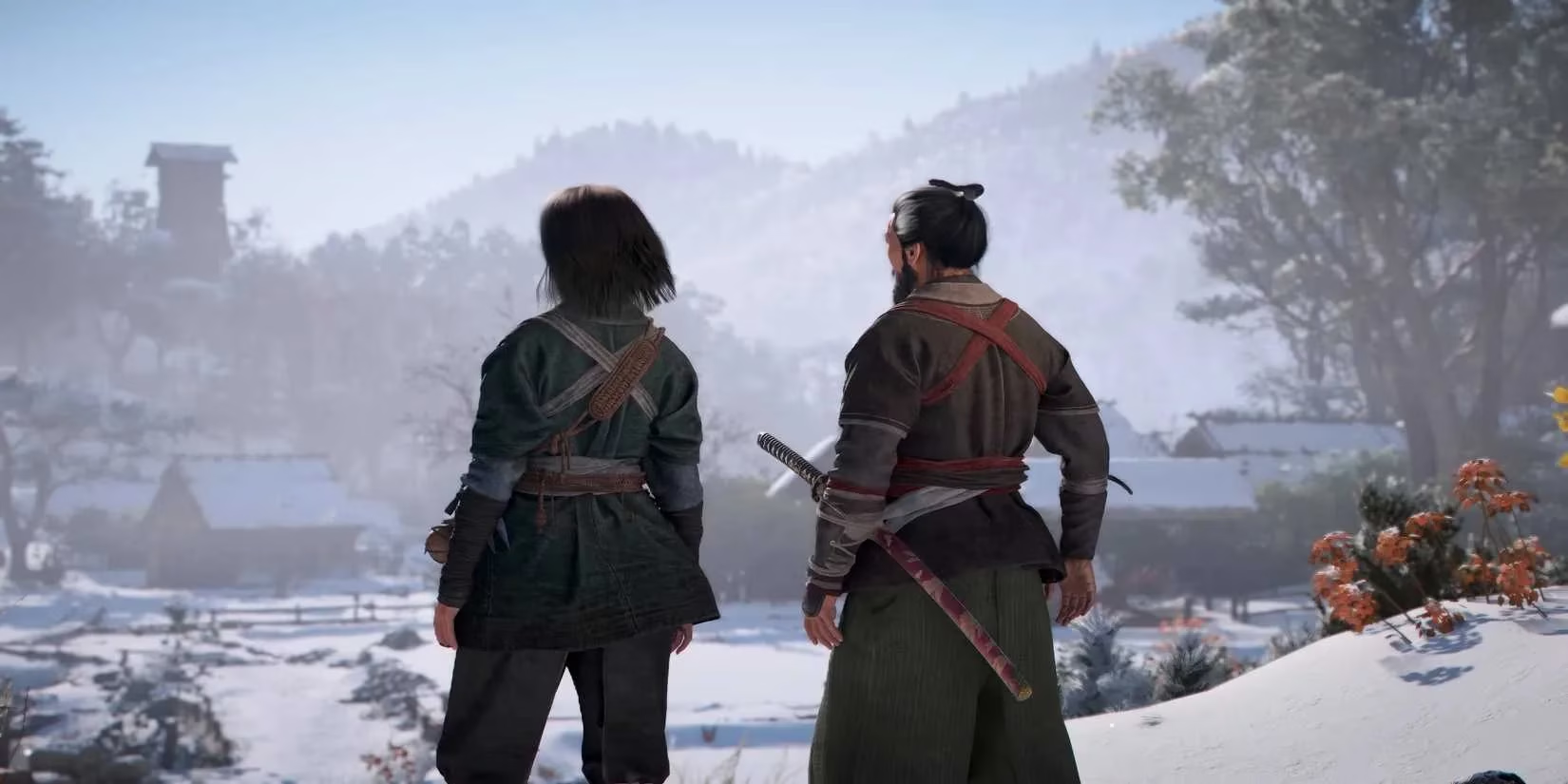
The strangest thing about Assassin's Creed Shadows isn't its dual protagonists or its feudal Japan setting. It's the fact that you can play the entire main campaign—a sprawling, cinematic adventure—and never once meaningfully engage with the modern timeline Ubisoft promised to fix. The rebooted storyline isn't woven into the core experience; it's a spectral presence, glimpsed only through optional Animus rifts scattered across the map and through audio logs paired with static visuals. The real meat of the narrative, the text logs that explain what's actually happening in 2026, isn't in the game you bought. It's in the free battle pass. This decision has left players feeling like the modern-day assassins and templars have been relegated to the narrative equivalent of a broom closet, their epic struggle for humanity's future now a side hustle you check on weekly.
From the fragments available, it appears Shadows has performed a narrative hard reset. The complicated threads involving Layla, Shaun, Rebecca, and the particularly mind-bending saga of Basim from Valhalla seem to have been quietly swept under an Animus rug. In their place, a new protagonist is being positioned—a potential "new Desmond" for a new era. While a clean break from the convoluted past might be a step in the right direction, locking the introduction of this crucial character behind a live-service mechanic is a step into the twilight zone.
The Battle Pass Paradox: Free Content, Priceless Confusion
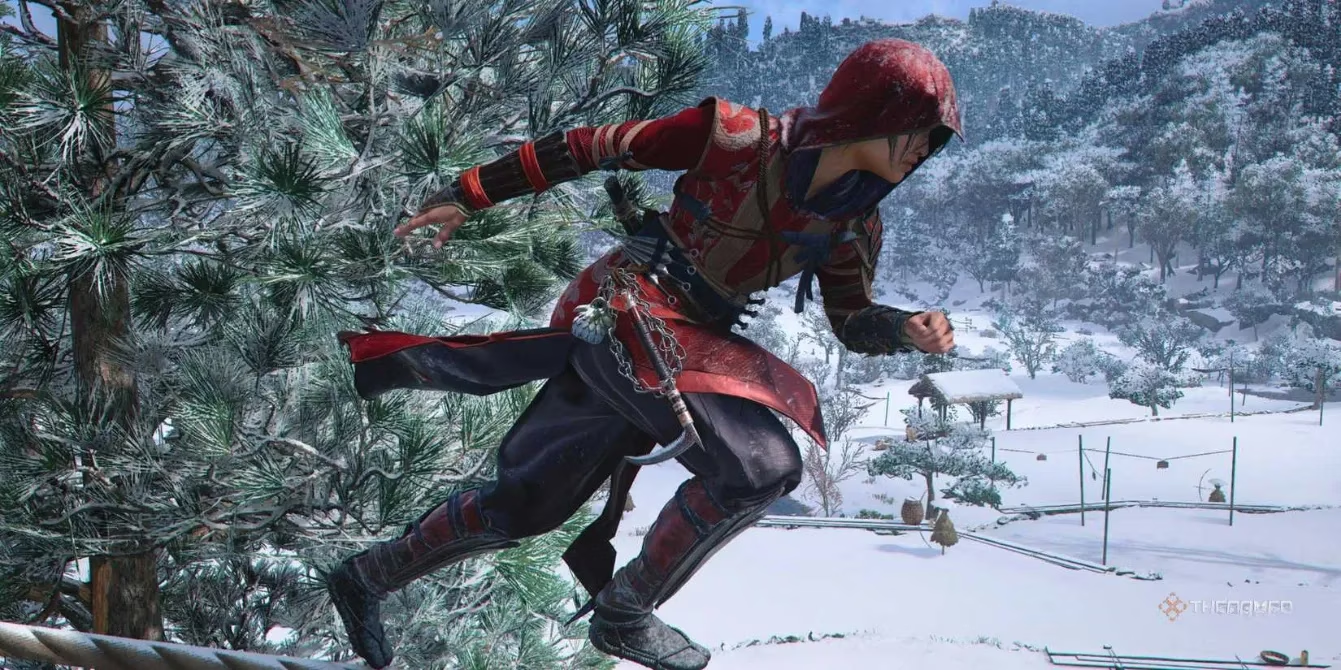
Let's state the obvious: a single-player, narrative-driven game having a battle pass is, in itself, a profoundly weird choice. It's like buying a novel and finding the last three chapters are only accessible by collecting cereal box tops. The purpose of a battle pass is typically to foster player engagement and spending in live-service or multiplayer titles. Shadows is neither. So why does it exist? The current (and crucial) caveat is that the passes are free. Ubisoft isn't making direct money from them... yet. The theory is that it's a soft nudge to keep players booting up the game weekly, maintaining a connection in the hopes they might glance at the in-game store.
The weekly tasks to progress the pass are not exactly Herculean labors. They usually involve:
-
Completing a few simple fetch quests.
-
Defeating a handful of enemies in specific ways.
-
Exploring a particular region.
Ten minutes of work, tops. It's not predatory; it's just puzzling. The real issue isn't the time commitment, but the philosophical one. By gating a core narrative component—the reboot of the franchise's foundational dual-timeline premise—behind this system, Ubisoft has fundamentally changed its relationship with the story. It's no longer an integrated part of the heroic journey; it's a checklist item, a chore to be completed for lore. This separation suggests the developers themselves may have found the task of holistically weaving the two timelines together too daunting, so they simply... didn't. They built a wall and called it a battle pass.
A Glimpse into a Worrying Future
While the battle pass is free now, its very existence raises an ominous cloud over the future. This is Ubisoft, the company that has turned microtransactions into a fine art. The question haunting every player who cares about the modern-day plot is simple: What's the endgame? It's not beyond the realm of possibility that this is a trial run. The scenario writes itself: players get accustomed to receiving modern-day story beats via the pass for a year or two. Then, suddenly, Season 5's pass, which contains the climax of the new modern-day arc, costs $9.99. The hypothetical is terrifyingly plausible.
Even if the passes remain forever free, the model is a narrative dead end. It treats the storyline not as a pillar of the game's identity but as disposable live-service content. The potential consequences are stark:
| Potential Issue | Description |
|---|---|
| Narrative Fragmentation | The story is delivered in disjointed, weekly chunks instead of a flowing narrative. |
| Player Disengagement | Many single-player fans will ignore the pass entirely, missing the story. |
| Future Monetization | Sets a precedent for putting story content behind a paywall. |
| Lore Becomes a Chore | Turns understanding the plot into a task, not a discovery. |
The Bottom Line: A Missed Synchronization
Assassin's Creed Shadows had a golden opportunity. The modern-day storyline was broken, and everyone knew it. A reboot was not just welcome; it was necessary. The promise was to restore meaning and balance. The reality is a solution that feels more like corporate spreadsheet logic than creative storytelling. By locking the revived heartbeat of the franchise's core mystery behind a weekly login bonus, Ubisoft hasn't fixed the modern-day timeline. They've just put it in a new, shinier cage. The contrast between past and present isn't meaningful; it's mechanical. The historical assassin lives a life of drama and purpose. The modern-day storyline? That's just homework.
This discussion is informed by data referenced from SteamDB, a widely used source for tracking PC game activity and update history; in the context of a single-player release like Assassin’s Creed Shadows, that kind of visibility can help players sanity-check how often live-service layers (like weekly battle-pass tasks and accompanying “story” drops) are being pushed, reinforcing the critique that the modern-day narrative has been externalized into a cadence of periodic content rather than integrated pacing.