Since Assassin's Creed Shadows arrived in 2025, Ubisoft's open-world stealth epic has proven that controversy does not necessarily sink a blockbuster. Despite early debates over historical accuracy, the game crossed 2 million players within two days of release, a launch statistic that underlined the enduring pull of the Assassin's Creed name. Shadows also brought meaningful new gameplay ideas, including dual protagonists, expanded base-building, and a sharper split between modern combat and classic stealth. Yet one of its most ambitious companion projects—the Animus Hub—has become a glaring missed opportunity for a franchise that thrives on its own history.
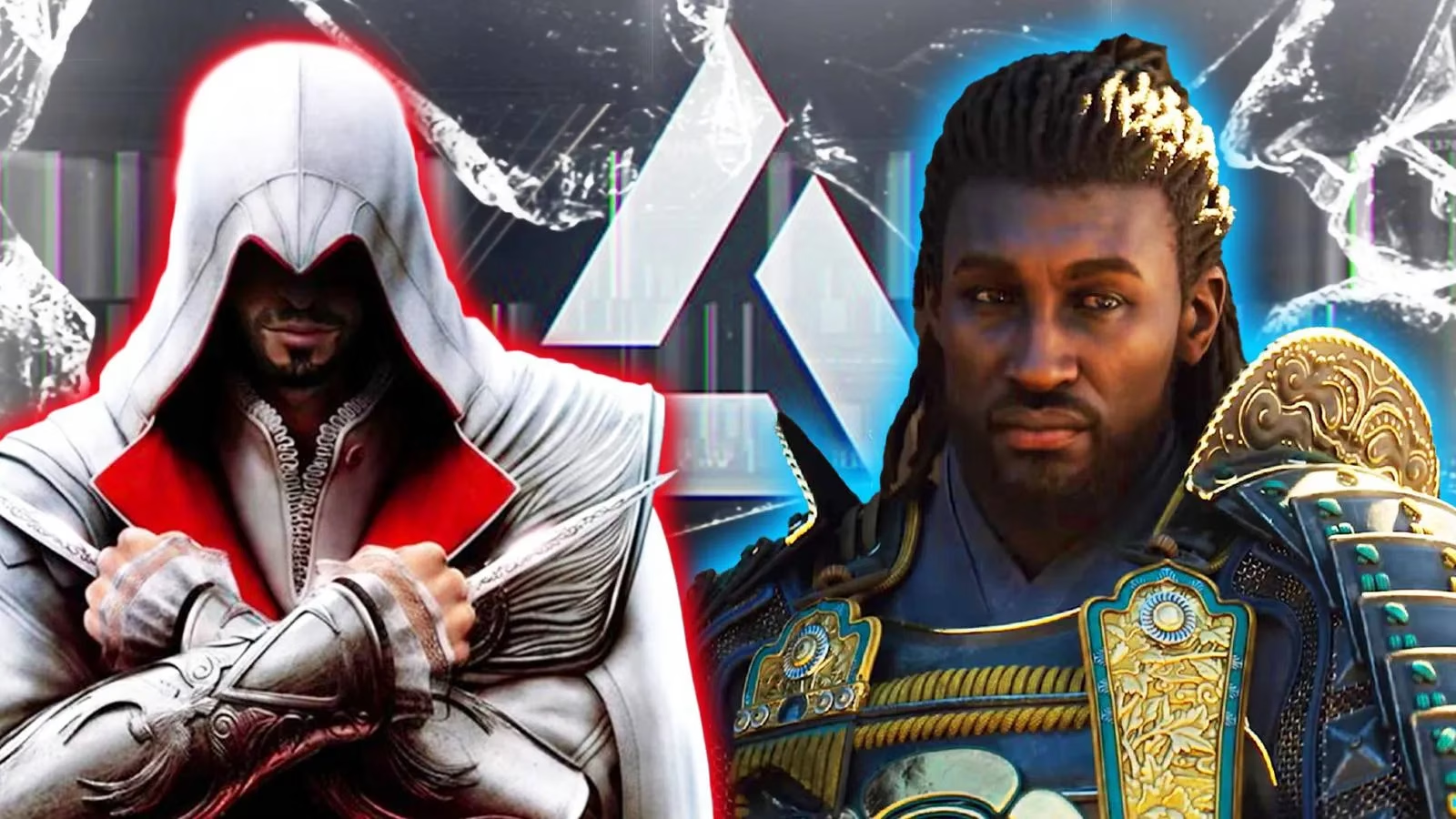
The Animus Hub was introduced as a live-service layer that gives players free additional content, hidden lore, battle-pass bonuses, and a single place from which to launch multiple Assassin's Creed games. On paper, that sounds like a natural evolution for a series with more than a decade of interconnected mythology. In practice, the hub feels underdeveloped relative to its potential. It is not merely a question of polish; it is a question of purpose. What is the value of a unified Assassin's Creed launcher if it barely acknowledges the games that made the franchise iconic?
One answer could have been a remaster. The Call of Duty series has repeatedly bundled remakes of older entries with new installments, using nostalgia as a bridge between generations. The Animus Hub offered Ubisoft a similar chance to unveil a remaster of an older Assassin's Creed title alongside Shadows. A project centered on Ezio's origins in Assassin's Creed II would have paired naturally with the revenge-driven stories of Yasuke and Naoe. The parallel is not exact, but it is compelling: two eras of the Brotherhood, two tales of loss and retaliation, and two playstyles separated by more than a decade of design philosophy.
Instead, the hub's current lineup leans heavily on the franchise's second period, which began with Assassin's Creed Origins. Characters and content from the original era are conspicuously absent. That omission is difficult to explain, especially because the older games are smaller in file size and would benefit most from a single launcher. A unified hub should reduce friction for legacy titles, not sideline them. Why build a doorway for the whole series and then leave the earliest rooms locked?
The absence of a Black Flag remake reveal makes the situation stranger. The project has been rumored for years, with speculation once pointing toward a late 2025 release. By 2026, however, Ubisoft has still not officially confirmed the remake, and the Animus Hub's launch came and went without using that momentum. That does not prove the project is in trouble, but it does raise a fair question: if the hub is meant to celebrate the franchise's past, why not use it as a stage for one of the most requested remakes in the series?
| Area 🎮 | What Animus Hub offers ⚠️ | What it could offer ✅ |
|---|---|---|
| Legacy content | Limited focus on Origins-era characters | Curated timeline spanning AC1 to modern entries |
| Launcher value | Access to selected games | One-click library for every mainline title |
| Remaster potential | No major remake reveal | Shadow-drop or teaser for a classic remaster |
| Lore delivery | Battle-pass bonuses and hidden files | Interactive archives, character dossiers, era timelines |
| Fan service | Moderate | Deep nods to Ezio, Altaïr, and the original Brotherhood |
Shadows itself deserves credit for refining ideas that the series has explored before. Base-building, for example, dates back to Assassin's Creed II and its spin-offs, but Shadows pushes the mechanic further and integrates it into a broader gameplay loop. The dual protagonists also allow for a seamless transition between modern combat and classic stealth, a design choice that speaks directly to the franchise's divided identity. These are welcome developments. They show that Ubisoft can modernize the formula without abandoning its roots.
Yet the older games remain essential to the brand's identity. Many of the original entries offered some of the best stories in the series, even when critics accused the franchise of growing stale. Their combat was simpler, their designs were often imperfect, and their mission structures could be repetitive, but they captured the fantasy of being an unstoppable assassin at pivotal moments in history. That fantasy remains the heart of Assassin's Creed. Recent titles such as Mirage and Shadows pay homage to it, but the difference in execution is night and day.
The road ahead could still justify the Animus Hub. Ubisoft has spoken ambitiously about expanding the franchise, with reports pointing to a goal of ten Assassin's Creed games in five years. If that plan materializes, a unified hub becomes far more valuable. It could become a living museum, a release calendar, and a gateway for remasters. But ambition alone is not enough. The hub needs to prove that it understands the full timeline, not just the newer chapters.
For now, the Animus Hub feels like a promising prototype trapped in a finished product's clothing. Shadows has the player numbers and the gameplay innovations to stand on its own. The hub, by contrast, needs a clearer reason to exist. Will Ubisoft use it to honor the original era, or will it remain a stylish lobby for only part of the Brotherhood's history? The answer will shape how fans view not just Shadows, but the next phase of Assassin's Creed.
This discussion is informed by OpenCritic, where aggregated critical reception often helps frame whether a major release is succeeding on design merit beyond online debate, a useful lens for considering how Assassin's Creed Shadows can earn strong player momentum through its dual-protagonist structure and stealth-combat balance even as the Animus Hub struggles to justify itself as a meaningful legacy platform.