By 2026, the day-one patch that removed shrine and temple destruction from Assassin's Creed Shadows remains a revealing chapter in the long, noisy relationship between historical fantasy and public outrage. Ubisoft did not remove the feature because the game demanded it. It removed it after a Japanese politician raised concerns that people might hypothetically reenact clips of shrines being defiled, and after the Prime Minister of Japan said such acts would not be tolerated. That context matters. Japan already faces a real, ongoing problem of tourists disrespecting sacred sites. In the same week, a site featured in Ghost of Tsushima was closed for that very reason, even though that game never let players destroy its shrines. The controversy around Shadows, however, was framed differently: as proof that gamers might intentionally deface real monuments. The vast majority of players understand that slashing a virtual shrine with a katana does not inspire real vandalism. So why was the conversation treated as if it did? 🤔
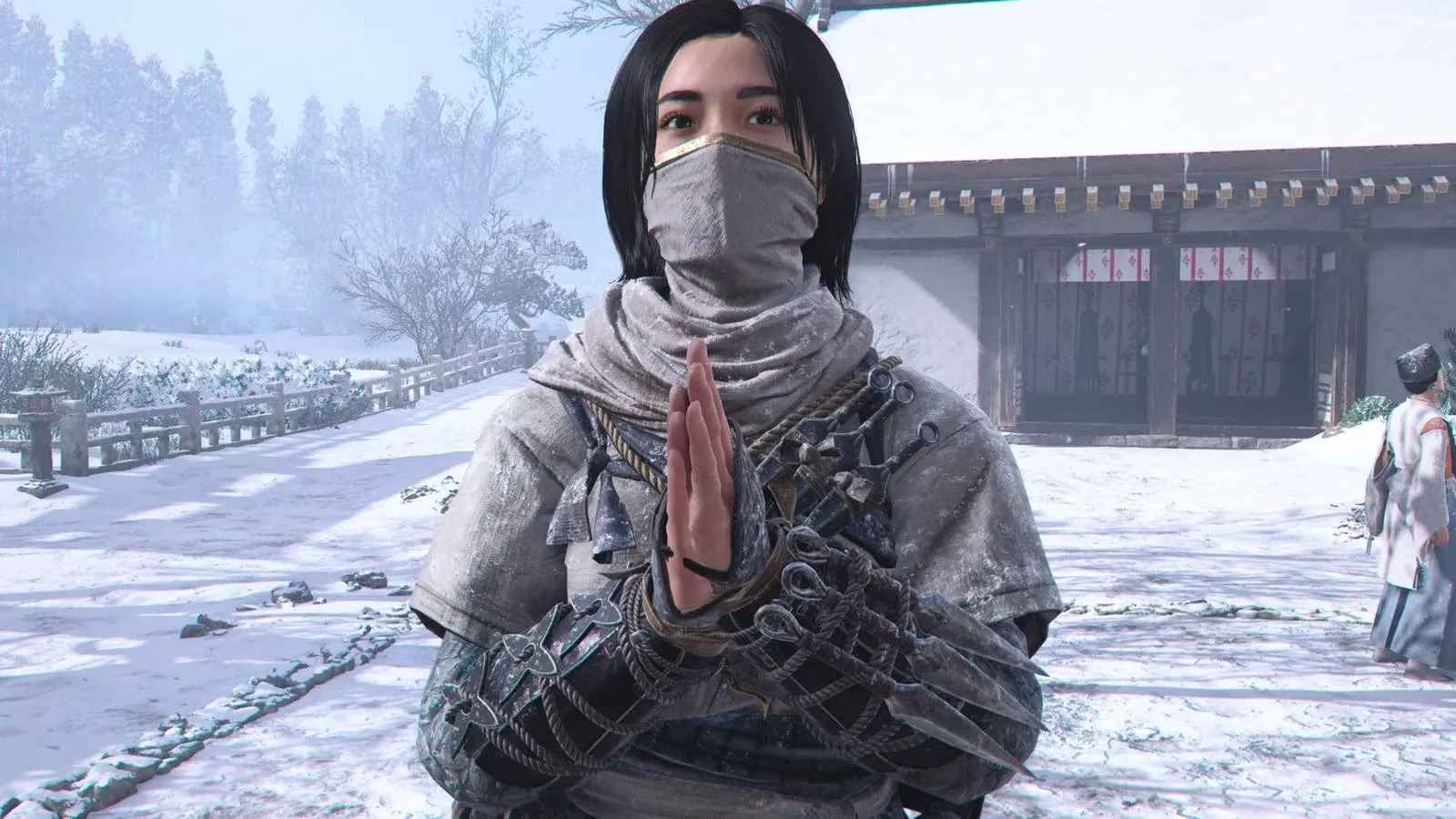
The answer lies less in respect for Japanese culture and more in manufactured outrage. Much of the backlash against Shadows had already fixated on Yasuke, one of its protagonists, with detractors claiming he was not really a samurai. That argument did not land as intended. When a movement appears to be built on discomfort with a Black protagonist, it struggles to present itself as a noble defense of history. The same bad actors then pivoted. They claimed that destroying shrines in a video game was an insult to an entire nation. Both angles shared a convenient claim: they were about respect for the Japanese people. Yet the outrage was not organic. It was a campaign looking for a legitimate reason to heap backlash on Shadows.
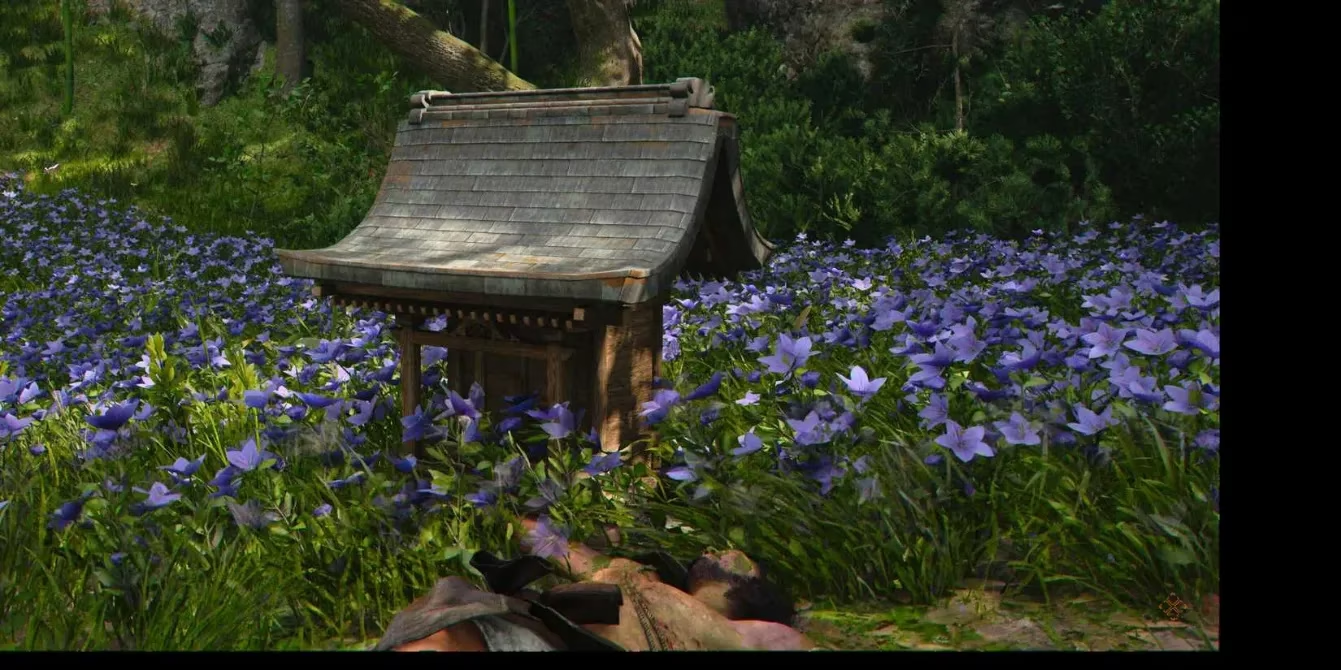
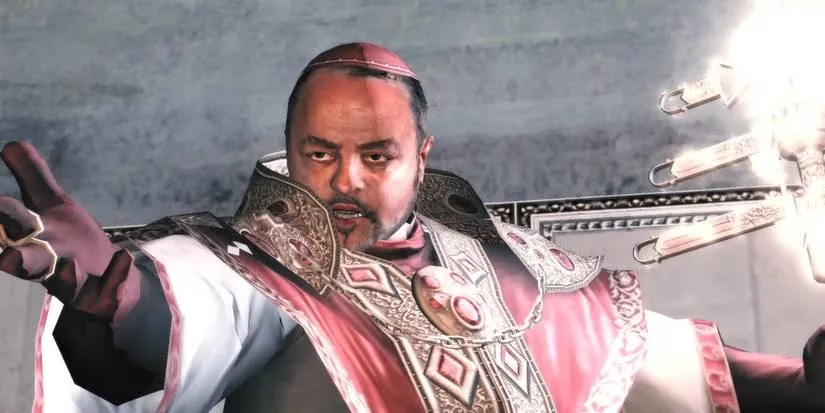
It is also deeply absurd to ask Assassin's Creed to respect anything. This is a series that has never treated sacred ground, historical figures, or organized religion with kid gloves. It portrayed Cardinal Rodrigo Borgia, a man who became Pope and therefore one of the most deified figures in the world's largest religion, as a Grand Master of the Templar Order. It gave players a game in which they beat the Pope. Assassin's Creed Valhalla turned burning down monasteries, pillaging them, and using stolen materials to upgrade a settlement into a core mechanic. Where was the international incident then? Where was the prime ministerial statement? If the concern is truly about respecting religion, that backlash never arrived. 🔥
| Entry | Depiction | Backlash? |
|---|---|---|
| Rodrigo Borgia | Pope and Templar Grand Master | Minimal |
| Valhalla monasteries | Burned, pillaged, looted for settlement upgrades | Minimal |
| Historical monuments | Used as parkour playgrounds | Minimal |
| Historical figures | Assassinated in cold blood | Minimal |
| Japanese shrines | Destroyed through incidental physics | Day-one patch |
Why does Japanese culture receive special treatment? Is it not absurd to assume that Japanese people are so sensitive that they cannot handle a few virtual broken tables in imaginary shrines? Every religion is sacred to someone. Every culture has sites that matter. If Ubisoft did not care then, it should not have cared now. To patch the feature out is, put simply, self-censorship. Worse, it was triggered not by a government genuinely concerned with historical accuracy and the sacred in video games, but by people who wanted a reason to force Ubisoft to capitulate. And capitulate it did. ⛩️
The change itself is small and probably unnoticeable. Shadows never incentivized shrine destruction the way Valhalla rewarded monastery raids. It was an incidental thing a player could do while mucking around. The game did not tell players they should do it. It did not even tell them they could. In fact, it previously asked players to show respect before the patch removed the interaction entirely. What was removed was not a mission, a reward, or a narrative statement. It was an application of video game physics that spanned the whole game. 🎮
In Assassin's Creed, players have scrambled up historical monuments. They have murdered historical figures in cold blood. They have been invited to inhabit alternate histories and to perpetuate them again and again. The people now speaking about historical accuracy and cultural respect are acting in bad faith, and studios are giving them legitimacy. That is the real problem. A small patch can look like a compromise, but it also sets a precedent: if outrage is loud enough and bad faith is organized enough, even a fictional shrine can become a bargaining chip.
By 2026, the episode reads as a warning. Games are not rituals. Virtual vandalism is not real vandalism. Players control the buttons they press, and most of them know the difference between a digital temple and a living one. The better response to manufactured outrage is not capitulation. It is clarity. Ubisoft's patch may have been minor, but the reasoning behind it was not. It rewarded a campaign that never cared about respect in the first place.