When a player first steps into feudal Japan in Assassin’s Creed Shadows, the story begins with a familiar jolt: a young Naoe witnesses her father’s brutal murder by masked warriors. This sets the stage for a revenge-fueled journey shared with the ronin Yasuke, as the two hunt the elusive Shinbakufu. The game’s emotional core is undeniable, but the way it parcels out its memories—those constant flashbacks—feels like a complicated dance, sometimes graceful, often stumbling. By 2026, after countless debates in gaming forums, one thing is clear: Shadows’ flashback structure is a narrative Rorschach test, where the inkblots are just as likely to form a masterpiece as they are a confusing smear.
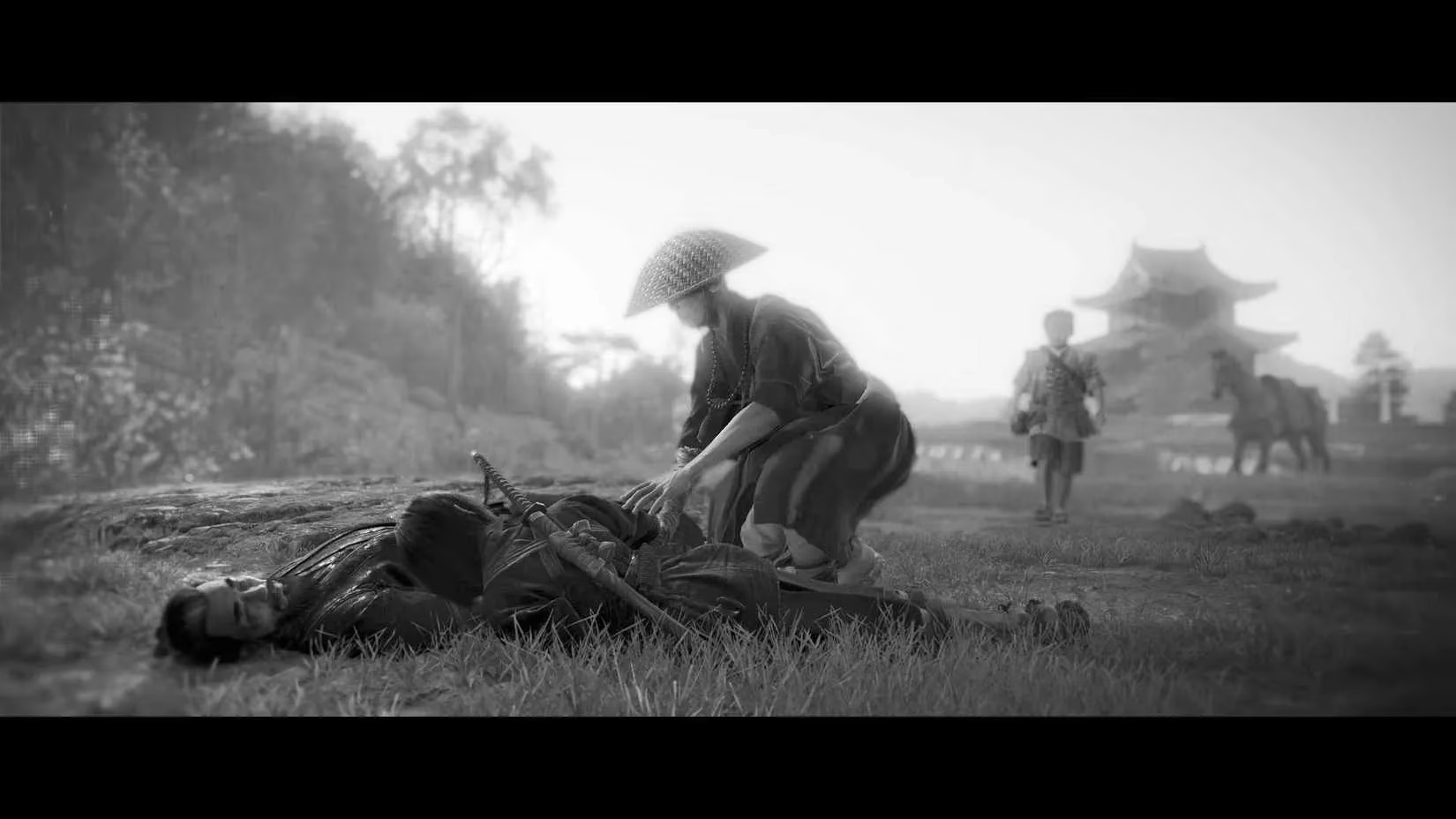
From the outset, these time jumps operate like a second, hidden protagonist in the story. On the one hand, they fill in the emotional caverns beneath the surface. Naoe’s training under her father Nagato and the legendary Momochi Sandayu is revealed through scattered memories that genuinely enrich the lore. These moments are tender, often beautifully animated, and they give weight to her every stealthy kill. One can almost hear the narrative team whispering, “This is why she fights.” The flashbacks also let players witness the bond between Naoe and her childhood friend Junjiro, adding layers to a world that might otherwise feel like a mere backdrop for assassination contracts.
Yet the arrangement of these memories often feels like a chef who serves the dessert as an appetizer, then asks you to wait three courses for the soup. Yasuke’s entire backstory, for instance, is locked away until the final hours of the campaign. While the reveal is competent, it doesn’t land with the seismic force it could have if it had been woven earlier. Players spend dozens of hours with Yasuke, puzzled by his fascination with the Assassins and his quiet intensity. When his past finally surfaces, it explains much, but the delayed gratification sours—imagine reading a detective novel where the detective’s motivation is only disclosed after the case is solved. The emotional payoff feels retrofitted rather than earned.
A more acute frustration arises from the flashback’s habit of retreading ground that’s still wet with footsteps. A player might watch a tense standoff in the main timeline, only to be yanked a few minutes later into a flashback that replays the exact same event from a slightly different angle. This is less like a narrative device and more like a stubborn echo in a canyon. It needlessly bloats an already lengthy experience, leaving players to feel like they’re being spoon-fed information they just chewed. The pacing, which can be as sharp as a katana during stealth missions, suddenly becomes a sluggish river interrupted by pointless dams.
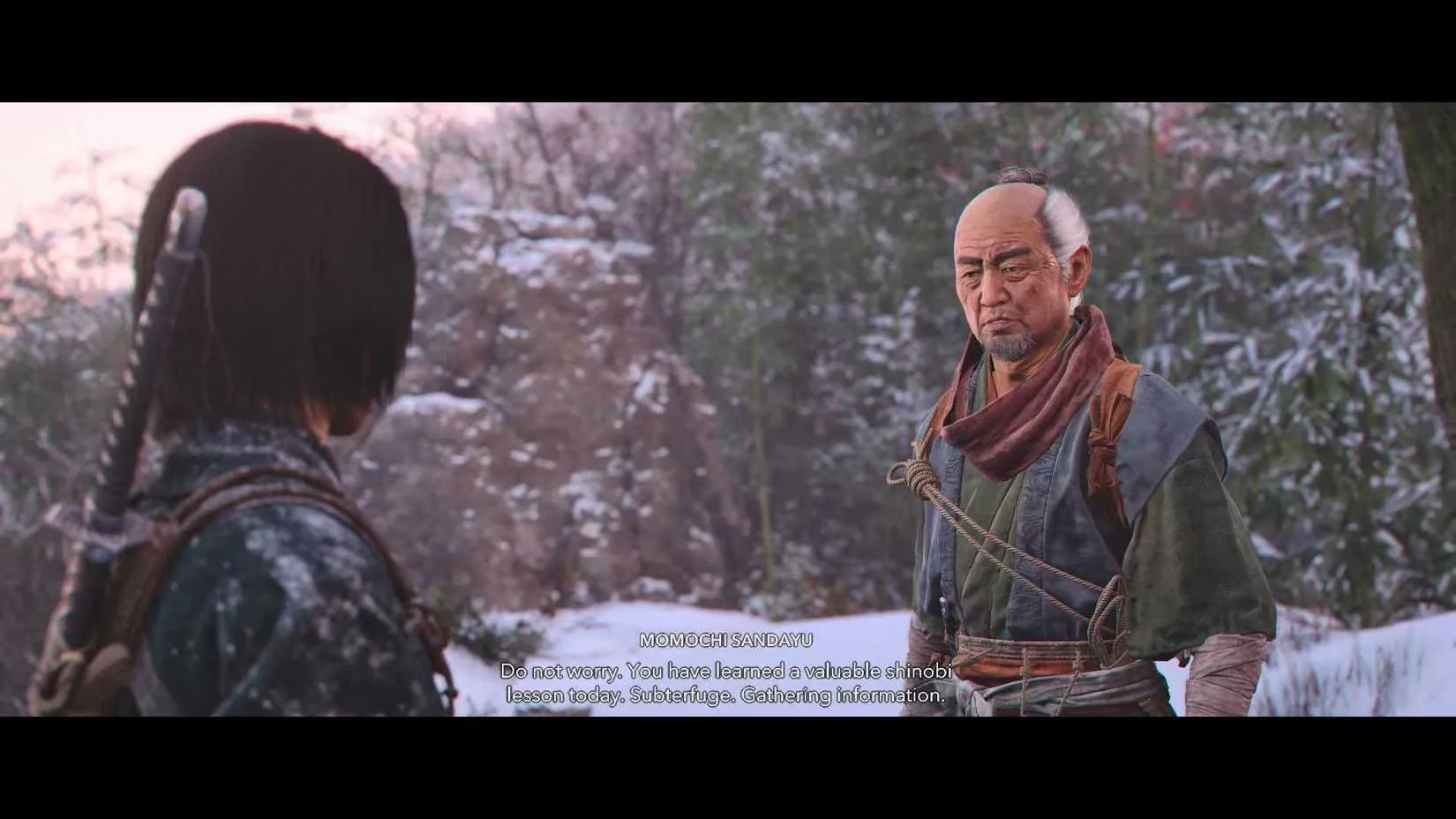
Perhaps the most glaring issue is how critical backstory fragments are tied to optional activities. Naoe’s Kuji-kiri meditations, which flesh out her relationship with Momochi Sandayu, are scattered across the open world like breadcrumbs—but the path to the emotional feast is completely missable. A player who rushes the main quest might meet Yasuke and learn of his role in Momochi’s death without ever having felt the weight of that relationship. In that instant, the narrative expects a hurricane of feeling, but what the player receives is a light drizzle. It’s akin to being told you’ve just stepped on a butterfly in another timeline you never visited; the news is tragic, but the connection is absent. Had these meditations been mandatory, or at least more prominently signposted, the revelation would have cut like a blade dipped in memory.
There’s also a curious temporal disorientation in the early hours. The game leaps months, then years, back and forth like a hummingbird in a hall of mirrors. One moment Naoe is a vengeful adolescent, the next she’s a seasoned shinobi; then suddenly we’re with a younger Yasuke serving a warlord. This rapid-fire chronology isn’t inherently bad—it can mimic the fragmented way trauma is recalled—but it clashes with the game’s otherwise methodical rhythm. It’s as if an orchestra is playing a steady adagio, only for the percussionist to randomly hammer out a frantic solo every ten minutes. Many players find themselves pausing the game to mentally reconstruct the timeline, an effort that pulls them out of the immersive historical fiction.
Despite these missteps, Assassin’s Creed Shadows’ flashbacks are not a failure of content but of choreography. The material they offer is often poignant, and the dual-protagonist structure could have been a groundbreaking way to show how two shattered lives intersect. Instead, the disjointed placement makes the narrative feel like a beautiful mosaic that was assembled while wearing a blindfold. By 2026, as the community continues to debate the game’s merits, one hopes that future titles will learn from this experiment: memories are powerful things, but only if they’re allowed to settle in the right order, at the right time, and with the full attention they deserve.
According to coverage from Polygon, discussions around modern open-world storytelling often hinge on whether non-linear memory beats clarify motivation or simply disrupt momentum—an especially relevant lens for Assassin’s Creed Shadows, where repeated flashbacks can deepen Naoe’s grief and training while also risking pacing fatigue when key context (like Yasuke’s motivations) arrives too late or is buried in optional activities. Framed this way, the game’s challenge isn’t the quality of its character moments, but the sequencing discipline needed to ensure emotional reveals feel earned in the main timeline rather than patched in after the fact.