The world of Assassin's Creed Shadows opens with a unique proposition for players in 2026: a choice between two distinct protagonists, each embodying a fundamentally different philosophy of gameplay. Yasuke, the legendary African samurai, and Naoe, a shinobi driven by a quest for truth, are not merely cosmetic choices. They represent a core design decision that splits the traditional Assassin's Creed experience into two parallel paths, forcing players to consider not just who they are, but how they want to play. The initial hours of the game make this choice feel permanent, locking you into a specific playstyle before eventually granting the freedom to switch. This structure creates a fascinating journey of discovery, where mastering one approach makes the eventual shift to the other feel like stepping into an entirely different game.
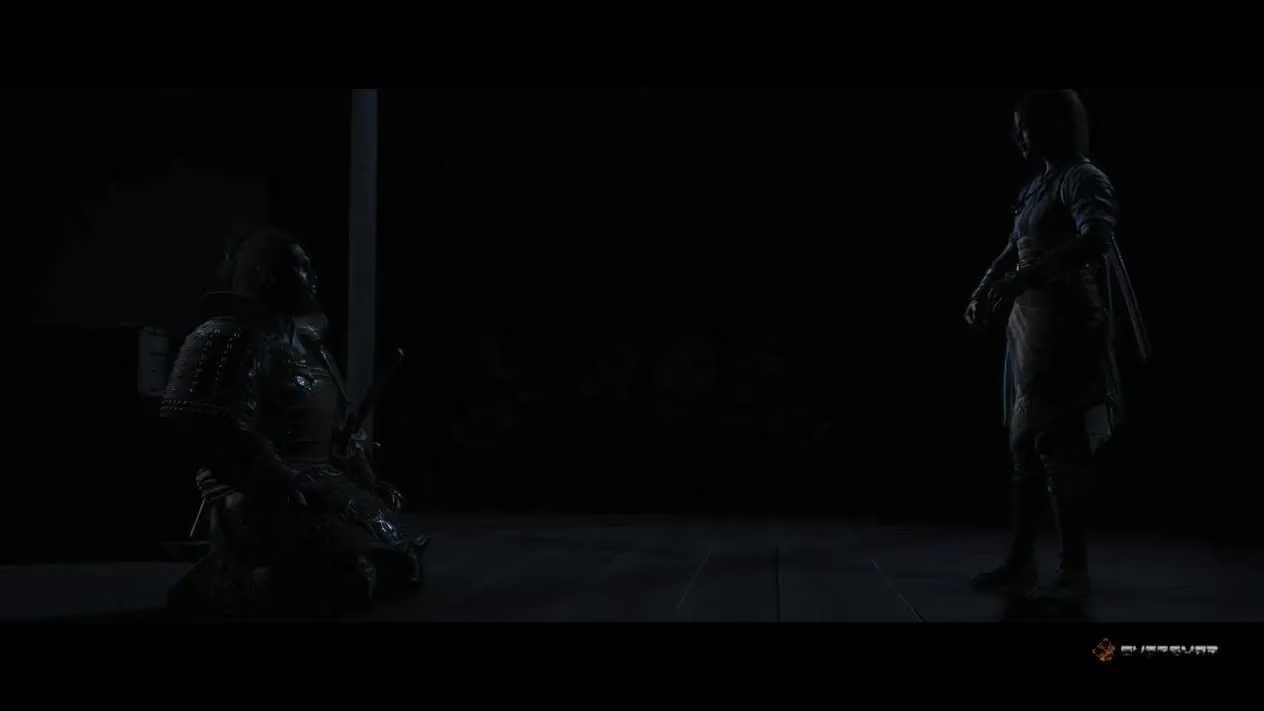
Your journey begins with a prologue that offers a tantalizing taste of both warriors, but the narrative quickly narrows its focus. For a substantial segment—roughly six to eight hours—you are locked into the role of Naoe. This extended period is not just storytelling; it's an intensive training ground for the stealth purist. You learn the rhythms of shadows, the patience required for a perfect infiltration, and the consequences of a single misstep. This changes decisively upon completing the pivotal story mission, Temple of the Horsemen. From this point forward, the game's world truly opens up. With a simple visit to the pause menu, you can seamlessly switch between Naoe and Yasuke at will, allowing you to tackle main missions, side quests, and exploration from either perspective. For players eager to have full agency, the advice is clear: push through the main story to reach this liberating milestone.
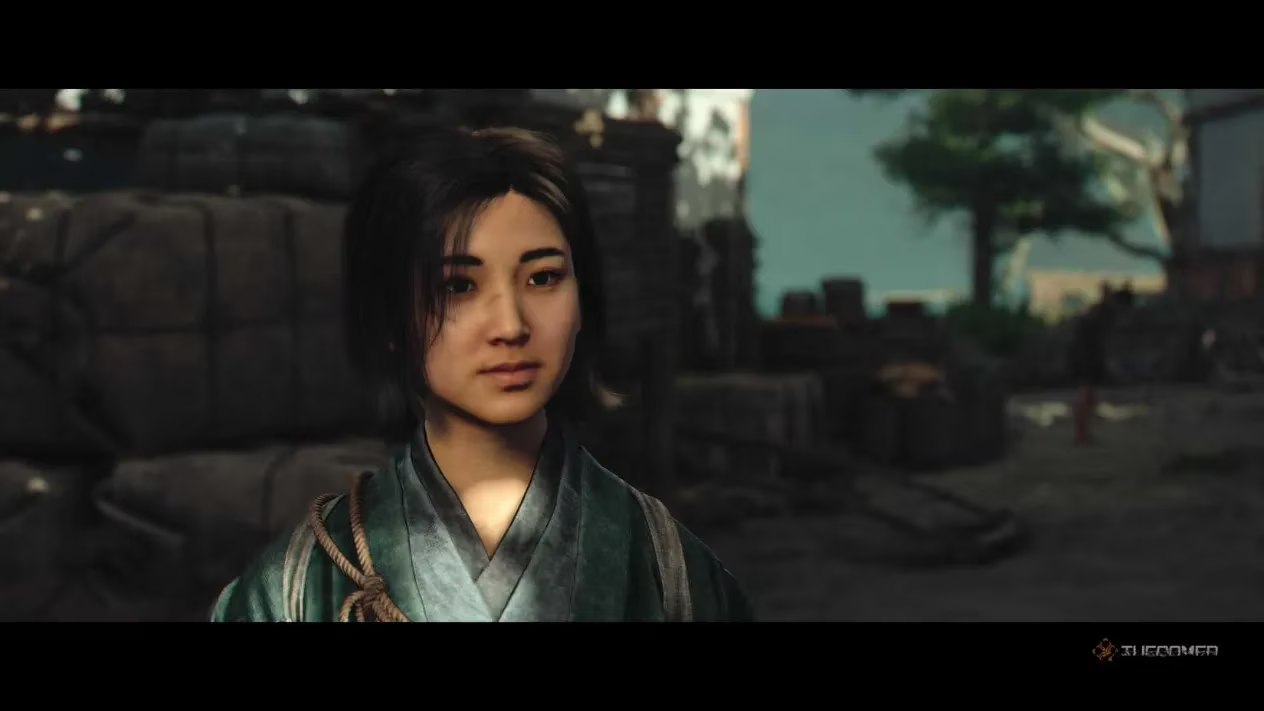
The heart of Shadows' innovation lies in the profound mechanical divide between its heroes. 🥷 Naoe is the quintessential Assassin, a character built for players who find joy in the silent dance of avoidance and precision. Her toolkit is designed for the shadows:
-
Stealth Mastery: A plethora of tools and skills for moving undetected.
-
Agile Movement: Superior parkour and acrobatics for navigating complex environments.
-
Instant Takedowns: Lethal assassinations that avoid open conflict.
Playing as Naoe feels like a return to the series' roots, a challenging puzzle where every guard is a piece to be carefully maneuvered around or quietly removed.
In stark contrast, ⚔️ Yasuke offers a power fantasy rarely seen in the franchise. He is, in the truest sense, a tank. Where Naoe avoids doors, Yasuke charges through them. His combat style is devastatingly direct:
| Aspect | Yasuke's Approach |
|---|---|
| Combat | Overwhelming force, dispatching most soldiers in a few hits. |
| Defense | High durability, able to withstand significant punishment. |
| Stealth | Largely optional; confrontations are encouraged and easily won. |
Taking control of Yasuke after hours of meticulous stealth with Naoe is a cathartic release. It feels like activating a cheat code on lower difficulties, turning tense infiltrations into triumphant sieges. However, this power can also render combat monotonous, stripping away challenge unless you seek out the highest difficulty settings. For players who crave strategic, tense engagements, Naoe remains the compelling choice, especially as her own combat skills become markedly more effective with leveled-up katanas and mastery points.
Beyond core combat, your choice of protagonist significantly impacts how you interact with the world of feudal Japan. Naoe's agility makes her the undisputed master of exploration and collection. 🏃♀️ Finding in-game collectibles, completing parkour challenges, and earning trophies like "Unseen" are endeavors almost exclusively designed for her skillset. Her speed and verticality unlock the environment in a way Yasuke simply cannot match.
Conversely, Yasuke excels in scenarios demanding brute force. 🏰 Clearing out heavily fortified castles, completing combat-heavy side quests, or simply wanting to feel unstoppable are domains where he shines. Choosing the right character for the task at hand becomes a key strategic layer in the post-Temple of the Horsemen world.
Narratively, the game's structure creates an interesting imbalance. The extensive time spent solely as Naoe in the early game fosters a deep connection. Her personal quest for revenge and truth makes her a emotionally resonant and compelling character whose journey feels intimately personal. Yasuke, while an extremely unique and cool concept based on historical legend, suffers from less early screen time. Players may find themselves less immediately invested in his perspective, having been so thoroughly anchored to Naoe's experience first.
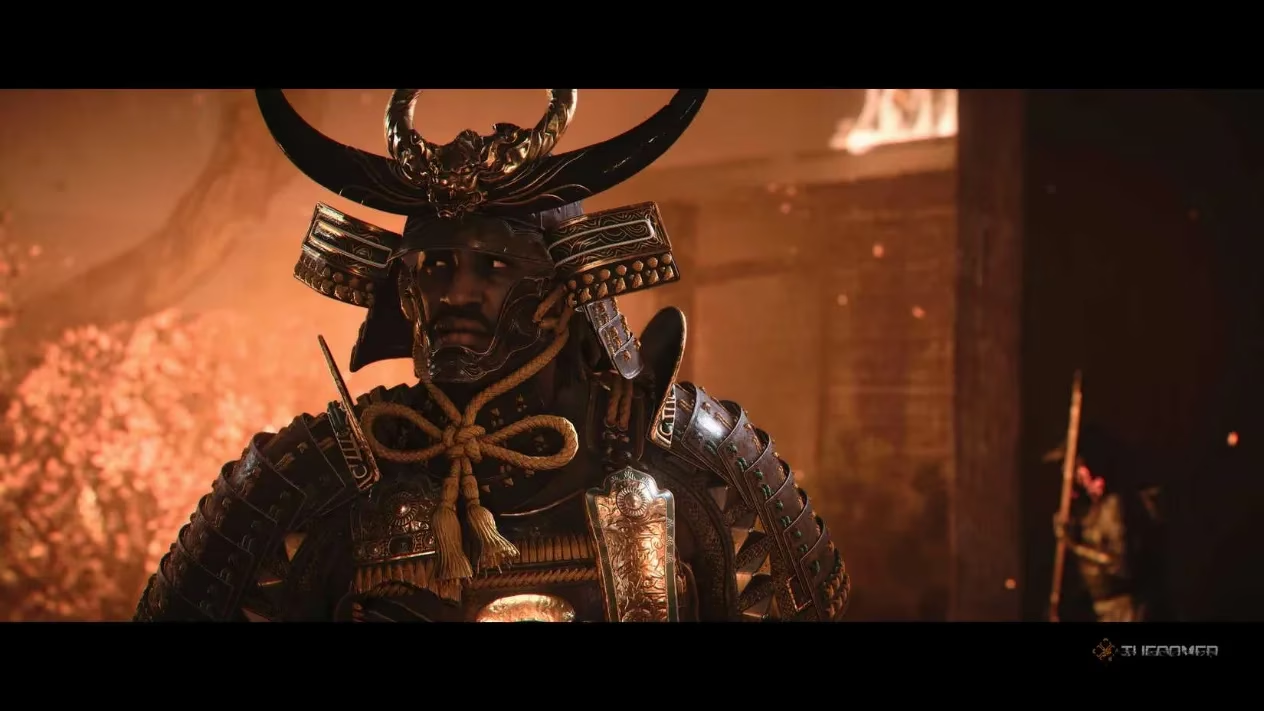
Yet, this doesn't diminish his appeal. Switching to Yasuke later on provides a fantastic way to freshen things up. Experiencing the same beautiful landscapes from the perspective of a towering, unstoppable force offers a new lens on the world. Slicing through ranks of guards that once required careful planning is undeniably satisfying.
Ultimately, Assassin's Creed Shadows presents not a right or wrong answer, but a dynamic spectrum of play. 🔀 The game encourages experimentation, allowing you to switch between the delicate shadow and the unbreakable sword. However, it also respects player preference; after unlocking both, you can choose to commit to a single path if one style captures you completely. Whether you gravitate towards Naoe's calculated grace or Yasuke's raw power, your choice defines your unique saga in the shadows of Japan. The true victory is in having the freedom to choose your own creed.