In the year 2026, the gaming landscape is saturated with experiences, but few manage to capture the profound, soul-stirring tranquility of a perfectly executed meditative mini-game. As the highly anticipated Ghost of Yotei prepares to transport players back to the frostbitten, vengeful shores of feudal Japan, all eyes are on Sucker Punch to evolve the serene traditions its predecessor, Ghost of Tsushima, so beautifully introduced. The blueprint for transcendence, however, might not lie within its own legacy, but in the shadowy, gesture-laden rituals of a rival. Assassin's Creed Shadows didn't just include meditation; it weaponized it, transforming the ancient Buddhist practice of Kuji-Kiri into one of the most immersive, narratively potent mini-games in modern memory. For Ghost of Yotei to truly resonate, it must not merely meditate—it must perform a hostile takeover of this brilliant concept and make it its own.
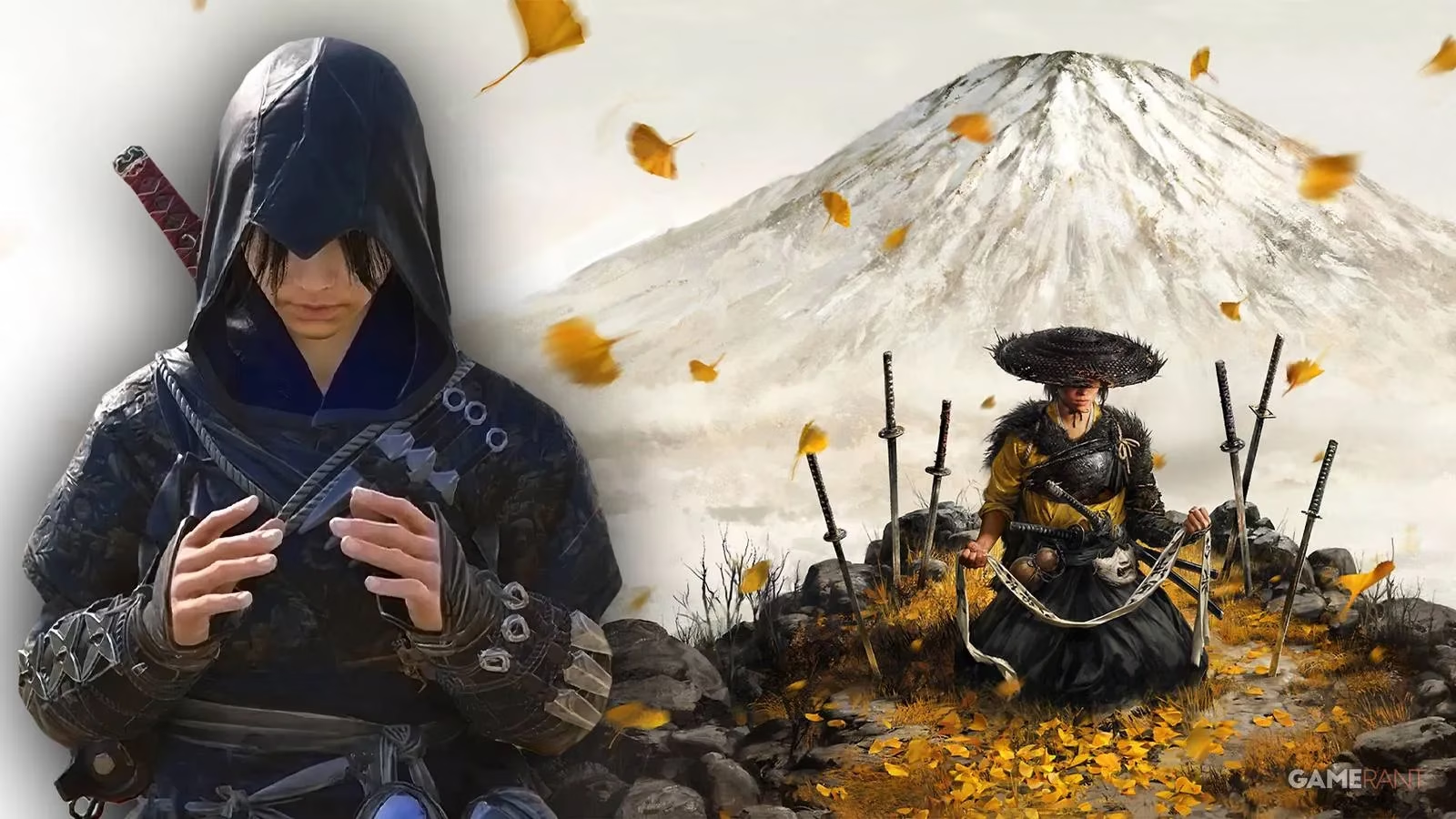
The Unparalleled Genius of Shadows' Kuji-Kiri 🧘♂️✨
Let's be unequivocal: Assassin's Creed Shadows' Kuji-Kiri isn't a mini-game; it's a metamorphosis. It begins deceptively simple, lulling players into a rhythm of pressing buttons in time with ethereal, ambient music. But then, the training wheels come off—spectacularly. The on-screen prompts vanish, forcing the player to rely solely on memory and focus to execute the intricate sequence of hand seals. This isn't gameplay; this is actual, digital meditation. The genius lies in this seamless transition from guided interaction to pure, mindful repetition, mirroring the very essence of the real-world practice it emulates. It demands a Zen-like concentration that few games dare to ask for, creating a pocket of profound calm amidst the chaos of an open-world epic.
Beyond Calm: A Narrative Powerhouse 🔥📖
Where Shadows' Kuji-Kiri ascends from great to legendary is in its narrative integration. This isn't a disconnected relaxation tool; it's the key to protagonist Naoe's soul. Each ritual unlocks visceral flashbacks, but not as passive cutscenes. These are playable memory quests, weaving the calming mechanics directly into the fabric of her tragic past and driving motivations.
| Feature | Ghost of Tsushima (Haiku/Springs) | Assassin's Creed Shadows (Kuji-Kiri) | Potential for Ghost of Yotei |
|---|---|---|---|
| Player Agency | 🟡 Mostly Passive | 🟢 Active & Memory-Based | Could be Revolutionary |
| Narrative Depth | 🟡 Atmospheric, Thematic | 🟢 Direct Character Backstory | Critical for Atsu's Arc |
| Immersion Level | 🟢 Visually Stunning | 🟢 Mechanically & Emotionally Deep | The Ultimate Fusion |
| Gameplay Reward | 🟡 Cosmetic/Charms | 🟢 Story Progression & Insight | Meaningful Progression |
Why Ghost of Yotei DESPERATELY Needs This Formula 💀⚔️
Ghost of Yotei's protagonist, Atsu, is defined by a cataclysmic, vengeance-fueled trauma—the utter annihilation of her homestead and family. Traditional, passive meditation spots (like writing haikus) would feel almost disrespectful to the magnitude of her pain. Here is where stealing Shadows' homework becomes an act of creative brilliance.
Imagine this: Atsu, seeking a moment of clarity amidst her storm of rage, finds a secluded shrine. Initiating a Kuji-Kiri ritual, the controller in your hands becomes an instrument of memory. As you struggle to recall the vanishing hand-seal prompts, you aren't just playing a game—you are fighting to focus Atsu's shattered mind. Success doesn't just grant a cosmetic headband; it violently unlocks a playable flashback.
-
You don't watch her family's laughter; you experience the warmth of her former life through a simple, joyful quest.
-
You don't hear about the attack; you participate in a frantic, doomed defense of the homestead.
This mechanic would forge an unbreakable, empathetic chain between player and protagonist. Every ritual would be a heartbreaking journey into the why behind her vengeance, making the eventual narrative payoff not just satisfying, but emotionally devastating.
Transcending the Predecessor: From Passive to Potent 🌅➡️🌋
Let's be frank: for all their beauty, Ghost of Tsushima's meditative moments were largely spectatorial. You observed a vista and composed a poem. You sat in a spring. They were gorgeous, but they were pauses. Ghost of Yotei has the chance to transform meditation from a pause into a powerful narrative engine.
By adapting Kuji-Kiri, finding these meditative spots becomes a core, thrilling part of exploration and character progression. It would instantly make them more valuable and engaging than any hot spring ever was. Players would actively seek out these shrines, not just for a moment of peace, but to unlock the next piece of Atsu's shattered soul.
The Verdict: A Necessary Heist 🎭
In 2026, players demand depth, integration, and emotional resonance. Assassin's Creed Shadows' Kuji-Kiri is a masterclass in providing all three through a seemingly simple meditative practice. For Ghost of Yotei to build upon its predecessor's legacy and truly do justice to Atsu's profound tragedy, it must look beyond its own borders. It must perform the ultimate act of creative homage: borrow, adapt, and perfect. Implementing a version of Kuji-Kiri tailored to Atsu's journey wouldn't be copying; it would be an evolution, transforming quiet reflection into the very heartbeat of the game's narrative. The path to enlightenment for Ghost of Yotei is clear—it's spelled out in nine symbolic hand seals.