As a dedicated player who's spent countless hours in Sucker Punch's worlds, I've been eagerly anticipating Ghost of Yotei since its announcement. Being one of PlayStation's two major releases for 2025 alongside Death Stranding 2, there's enormous pressure on this sequel to deliver. While Ghost of Tsushima was a commercial and critical triumph that I absolutely adored, it wasn't without its flaws. Now, looking ahead to Yotei, I can't help but analyze what needs to improve—and ironically, the blueprint for success might come from its direct competitor, Assassin's Creed Shadows.
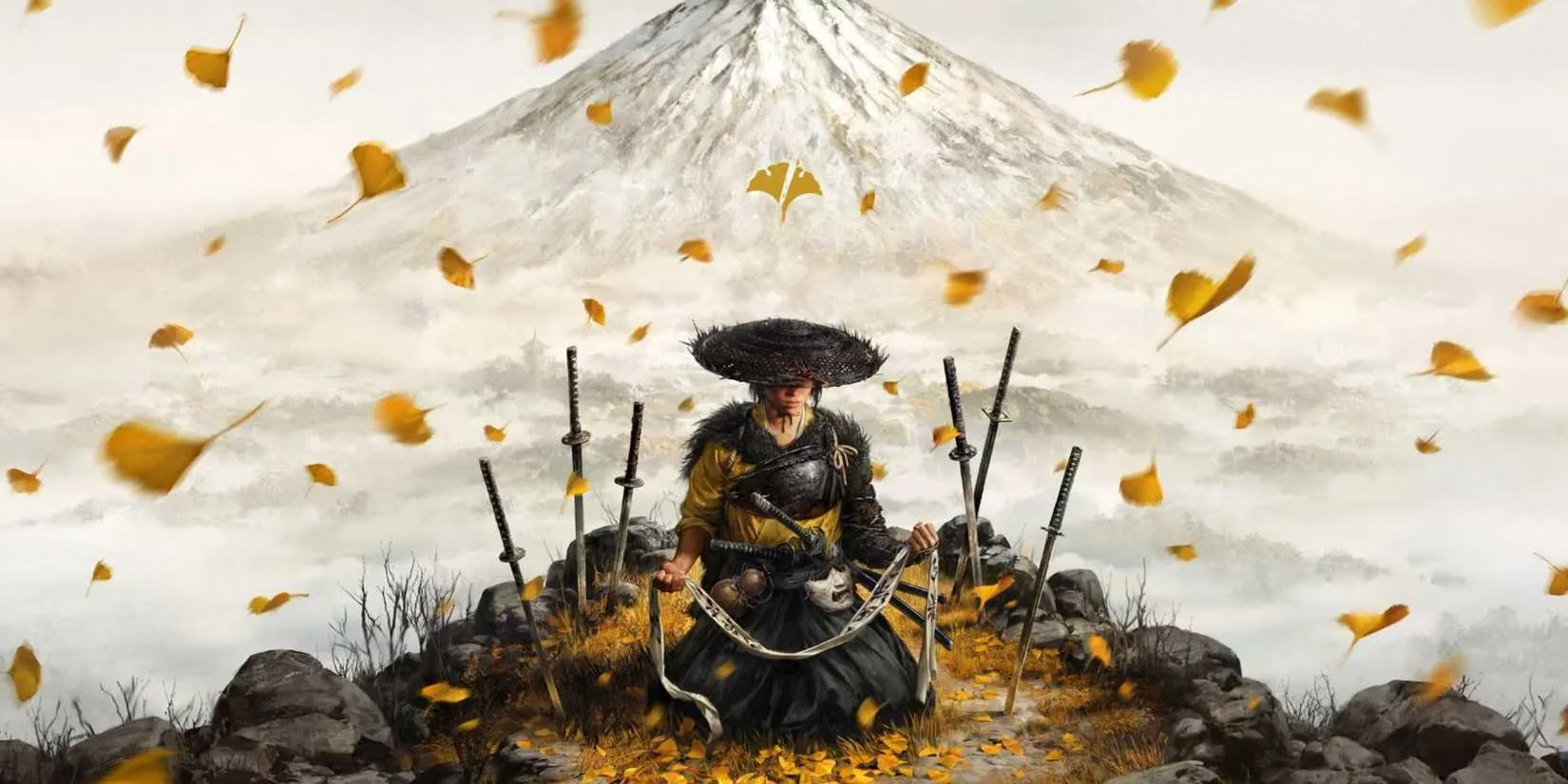
Why Ghost of Yotei Must Master Stealth from Day One
Let me be clear: Sucker Punch absolutely nailed third-person melee combat in Ghost of Tsushima. Those encounters felt flashy, fluid, and never grew stale across dozens of hours. I'm confident Ghost of Yotei will maintain that excellence in combat mechanics. However, where Tsushima truly stumbled was in its stealth implementation—it felt like an afterthought rather than a fully realized system. This is precisely where Assassin's Creed Shadows excels, and Yotei desperately needs to adopt these lessons.
Shadows' stealth mechanics are superior in almost every aspect:
-
Superior Parkour and Mobility: Naoe's movement options dwarf Jin's capabilities
-
Enhanced Tool Variety: More than just throwing rocks for distractions
-
Smarter Enemy AI: Enemies actually search for you rather than giving up quickly
-
Realistic Detection Systems: Tall grass isn't an automatic invisibility cloak
What Yotei Needs to Borrow from Shadows
1. A Genuine Stealth Sandbox
In Tsushima, stealth often felt like the "easy mode" alternative to combat rather than a legitimate playstyle with its own depth and rewards. Shadows demonstrates how to create a true stealth sandbox where players must:
-
Strategize approaches based on environment
-
Utilize diverse tools for different situations
-
Adapt to changing conditions and enemy patrols
2. Immediate Stealth Competence
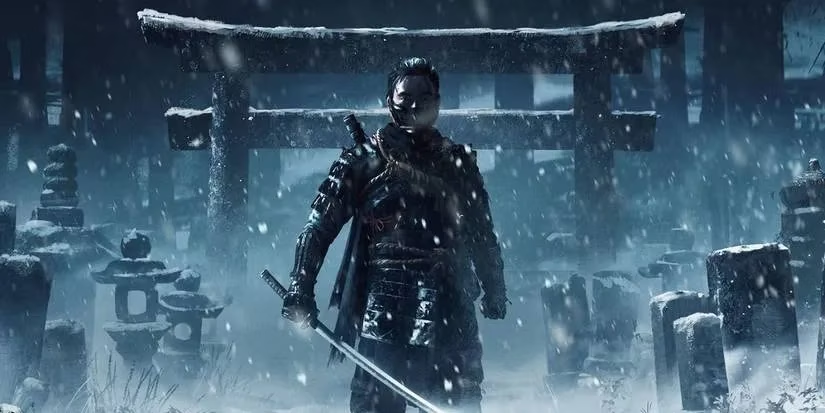
One of Tsushima's biggest frustrations was how long it took for stealth to feel rewarding. By the time I unlocked meaningful stealth abilities, I was already invested in combat. Ghost of Yotei needs protagonist Atsu to be competent from the start—either already established as the Ghost or well on her way. This could mean:
-
Starting with core stealth abilities unlocked
-
Having access to multiple tools beyond basic distractions
-
Presenting stealth as equally viable to combat from the opening hours
3. World Dynamics and Immersion
While Tsushima's world was beautiful, it often felt static. Shadows introduces dynamic elements that Yotei should consider:
| Feature | Ghost of Tsushima | Assassin's Creed Shadows | Ghost of Yotei Potential |
|---|---|---|---|
| Environmental Changes | Minimal | Changing seasons | Could implement weather/seasons |
| NPC Density | Sparse | Dense and reactive | More living, reactive world |
| Stealth Opportunities | Limited | Numerous and varied | Expanded verticality and hiding spots |
Narrative Cohesion and Player Agency
Ghost of Tsushima suffered from narrative dissonance—the story preached honor while gameplay rewarded dishonorable tactics. Shadows maintains better consistency between narrative and gameplay. For Yotei to succeed, it should:
-
Commit to a Direction: Either embrace stealth as a core identity or aggressive combat, rather than trying to be both
-
Avoid Retreading Tsushima's Arc: Atsu shouldn't repeat Jin's journey to become the Ghost
-
Offer Meaningful Choice: If presenting multiple approaches, ensure each feels fully developed
The Path Forward for 2025's Biggest Release
As we look toward Ghost of Yotei's release in 2025, the stakes couldn't be higher. The gaming landscape has evolved significantly since Tsushima's debut, and player expectations for stealth mechanics have been raised by titles like Shadows. What excites me most is the potential for Yotei to blend Tsushima's combat excellence with Shadows' stealth sophistication.
Key areas where Yotei must innovate:
-
Enemy AI Overhaul: Enemies that communicate, coordinate, and remember player patterns
-
Environmental Interaction: More ways to manipulate the environment for stealth advantages
-
Progression Systems: Stealth upgrades that feel meaningful rather than incremental
-
Mission Design: Objectives that genuinely encourage or require stealth approaches
Ultimately, if Ghost of Yotei can successfully integrate these lessons from Assassin's Creed Shadows while maintaining Sucker Punch's signature combat polish, we could be looking at one of the defining games of this generation. The foundation is there—Tsushima proved the studio understands compelling gameplay and breathtaking worlds. Now, with the stealth lessons from Shadows, Yotei has the potential to transcend its predecessor and deliver an experience that satisfies both combat enthusiasts and stealth purists alike.
As someone who cherishes both franchises, I'm not asking for Yotei to become Shadows—I'm asking for it to learn from Shadows' strengths while maintaining its own identity. The pieces are all there for Sucker Punch to create something truly special, and as we approach 2025, my anticipation grows with each new detail. Here's hoping they've been paying attention to what makes modern stealth games truly shine.