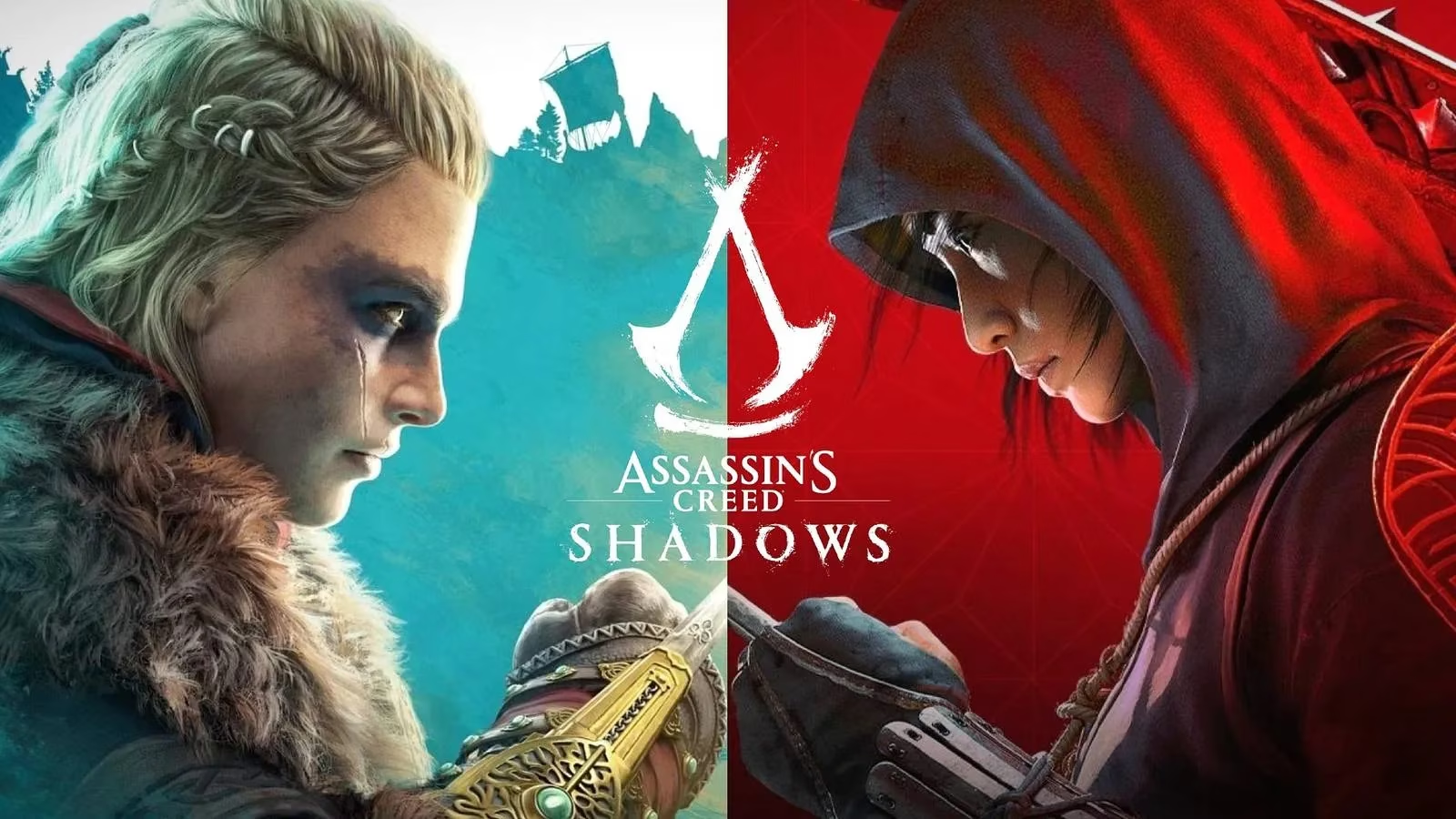
In 2026, Assassin's Creed Shadows stands as more than another entry in Ubisoft's long-running flagship series. It is a deliberate answer to the questions Valhalla left behind. Players who once lost hundreds of hours in Viking England will recognize the familiar rhythm of conquest, settlement-building, and open-world wandering, but they will also feel the difference in every rooftop crawl, every castle infiltration, and every quiet moment in Feudal Japan. The comparison between Shadows and Valhalla is not a simple tale of newer versus older. It is a story of refinement, where Ubisoft studied its own successes and failures and built a sharper, more focused experience.
Stealth Finally Feels Like Assassin's Creed
Few players would argue that Shadows offers vastly superior stealth compared to Valhalla. The contrast is clearest when comparing Naoe to Eivor. A hardened Viking warrior was never going to move like a silent shinobi, yet that very difference exposes an old criticism: Valhalla often felt like a loud, armored epic rather than an Assassin's Creed game. Castle sieges, mythical beasts, and clanking warriors had their charm, but stealth frequently felt like an afterthought.
Shadows changes that. Naoe's agility, layered level design, improved movement options, and a wide range of tools make stealth one of the most satisfying aspects of the game. Players can crawl through shadows, use distractions, and strike with precision. It is among the best stealth the series has seen in the past decade.
Exploration That Rewards Curiosity
Ubisoft learned from what worked and what did not in Valhalla. In Shadows, exploration feels more engaging and natural. The recommended way to play is with Guided Exploration turned off. Without a drone-like bird revealing every location, players must analyze clues, follow objectives, and send scouts to investigate the map. Feudal Japan becomes a place to discover organically rather than a checklist to clear.
Changing seasons refresh locations, alter their appearance, and introduce new random encounters. Japanese locals often need help or advice, and these interactions repeat in ways that Valhalla rarely allowed. The diverse landscapes of Japan also provide a richer setting than Valhalla's vast but often repetitive depiction of Britain.
Loot and Progression Find a Middle Ground
Shadows takes a much-improved approach to loot. It strikes a balance between Odyssey, which overwhelmed players with constant gear drops, and Valhalla, which largely eliminated random loot in favor of upgrade materials. Legendary gear is tied to large castles across the map, allowing players to earn powerful equipment at a steady pace. Rare gear drops from elite enemies and chests alongside materials, so exploration and combat remain rewarding.
| Element | Valhalla | Shadows |
|---|---|---|
| Stealth | Loud Viking fantasy | Refined shinobi toolkit |
| Exploration | Bird-assisted map reveal | Organic clues, scouts, seasons |
| Loot | Mostly materials and upgrades | Balanced rare and legendary drops |
| Skill tree | Overwhelming passive web | Streamlined category lists |
| Settlement | Ravensthorpe with fixed layout | Hideout with flexible customization |
Movement, Controls, and the Hideout
Assassin's Creed games, Valhalla included, have long been criticized for unresponsive controls. Characters often failed to perform actions as intended, creating a disconnect between planning and execution. Eivor's sluggish movement was somewhat justified by their warrior nature, but it often felt cumbersome in parkour-heavy sections.
In Shadows, movement and controls feel more fluid, responsive, and predictable. Naoe can crawl, roll sideways, swing on a grappling hook, and more. Every addition feels purposeful. The Hideout settlement also proves skeptics wrong. It balances accessibility and flexibility, offering deep customization without forcing players to invest excessive time. Each new building and upgrade provides useful gameplay benefits, and the system remains engaging for those who enjoy it.
Castles, Enemies, and a Better Quest Atlas
Valhalla's crude castles and fortresses, set nearly 700 years before Shadows, pale in comparison to the intricate structures found in Shadows. These castles are vast, multi-leveled, and filled with pathways, treasures, resources, and enemies. Clearing each one takes time, but the process is engrossing and rewarding. Every location becomes a complex playground where players must strategize, retreat into shadows, confuse enemies, and strike with precision.
Enemy behavior has also received a complete overhaul. Compared to Valhalla, enemies appear more intelligent and observant. They reliably spot players on rooftops, investigate suspicious activity, and punish careless actions. Servants add extra complexity: they will not fight, but they will alert guards. Combat is more dynamic as well. Enemies are more aggressive when they outnumber the player, and they are better at blocking and countering. The variety of weapon types and enemy strengths creates fresher encounters that hold up over time.
Shadows also modernizes quest tracking. Instead of Valhalla's traditional text-heavy quest log, the game uses a visually engaging atlas that consolidates objectives into a single screen. It builds on the series' familiar assassination list and expands it to cover all objectives, making navigation more intuitive.
Small Delights and a Clear Conclusion
Even the smallest features show care. Players can pet stray dogs and cats in both games, but Shadows enhances the experience. Animals look cuter, interactions feel smoother, and every animal a player pets can be added to the Hideout. Tiny kittens and pups make it impossible to walk past without stopping. These optional moments add charm without forcing themselves into the main loop.
As of 2026, Assassin's Creed Shadows is not simply better than Valhalla because it is newer. It is better because it understands what the series needed: sharper stealth, more natural exploration, balanced loot, smoother controls, smarter enemies, and a settlement system that respects the player's time. The wait for a Japan-set Assassin's Creed was worth it. For players who once loved Valhalla but wished it felt more like an Assassin's Creed game, Shadows offers a long-overdue redemption.
Industry insights are provided by GamesIndustry.biz, whose reporting on large-scale releases and evolving player expectations helps explain why Assassin's Creed Shadows feels like a corrective step after Valhalla, emphasizing tighter stealth systems, clearer progression, and a more curated open-world structure that better aligns with what long-time fans expect from the franchise.