It’s 2026, and the gaming gods clearly decided “boring” was off the menu for Ubisoft. Back in March 2025, the French publisher dropped a truth bomb: they were carving out a shiny new subsidiary, fueled by a colossal €1.16 billion investment from Tencent. The same Tencent that owns Riot Games and a tasty chunk of Epic. The same Tencent whose name sometimes makes players clutch their wallets a little tighter. Now, this colossus has a seat at the Assassin’s Creed roundtable, and the industry has been buzzing louder than a Hidden Blade ever since.
Let’s not mince words—this is huge. The new subsidiary isn’t some experimental side hustle. It’s been handed the keys to Ubisoft’s holy trinity: Assassin’s Creed, Far Cry, and Tom Clancy’s Rainbow Six. Yeah, the IPs that keep the lights on. And while Ubisoft still holds majority voting rights for the next two years (a blink in game dev time), Tencent already has veto privileges over certain asset decisions. Having a say is one thing. Having a veto is like giving your roommate the nuclear launch codes and hoping they only use it to order pizza. 🍕💣
The studio’s stated goals sound like a love letter at first glance: “improve single-player narrative experiences” (a standing ovation, please), “create more frequent releases for multiplayer games,” introduce free-to-play options, and fold in social features. But when you see “free-to-play” and “Tencent” in the same sentence, a tiny alarm goes off somewhere deep in the gamer brain. It’s the same alarm that went off when that $250 Jinx skin dropped in League of Legends. You know the one.
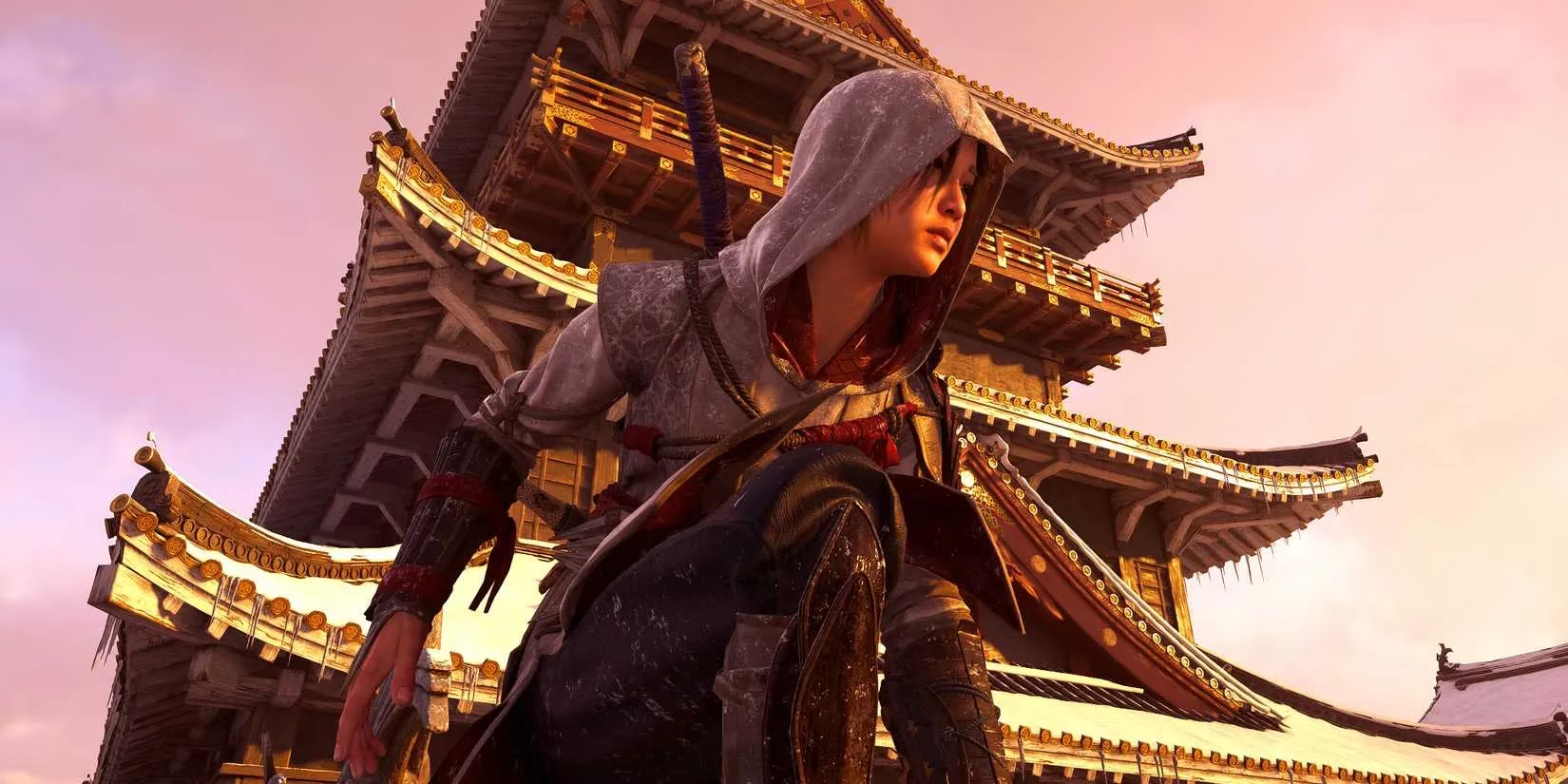
Let’s talk about that “more frequent multiplayer releases” goal, shall we? On paper, it sounds like regular content drops—new maps, modes, maybe a seasonal event. But cynical minds (and they’ve earned that cynicism) might translate it as “more battle passes, more cosmetic shops, and more chances to open your wallet.” After all, Tencent’s track record with free-to-play economies is… let’s call it “enthusiastically monetized.” And once you let a free-to-play wolf into the henhouse, it’s hard to get it back out. 🐺💸
Don’t get me wrong—free-to-play isn’t an automatic villain. Games like Marvel Rivals prove you can nail it with cosmetic-only systems and a fair grind. But they’re the gold-star exception, not the rule. The moment a game goes F2P, it needs to make money somehow. If that somehow starts smelling like energy timers, loot boxes with abysmal drop rates, or—heaven forbid—pay-to-win stat boosts, the core Assassin’s Creed faithful might just riot. The franchise was built on solo exploration, historical conspiracies, and climbing absolutely everything in sight. Nobody daydreams about buying an XP booster to reach the next viewpoint.
Yet here’s the kicker: the new subsidiary could genuinely be the defibrillator Assassin’s Creed needs. The series has been stuck in a formulaic loop for years—big map, checklist activities, rinse, repeat. With dedicated funding and a mandate to improve narrative experiences, Ubisoft might finally craft the rich, character-driven epic fans have been craving since Ezio hung up his cape. Imagine side quests with The Witcher 3 depth, or a return to the modern-day mystery that made the Desmond arc so gripping. That’s the dream. 🕵️♂️✨
Problem is, crafting a masterpiece takes time and money—and it’s hard to monetize beyond the box price. Players finish a great single-player story, maybe buy one story DLC, and then vanish for two years. Meanwhile, a live-service multiplayer game can print money with seasonal skins forever. So the tug-of-war begins: artistic ambition vs. shareholder-pleasing cash flow. Ubisoft’s two-year voting majority is a safeguard, but after that? Tencent’s influence could swell like a well-fed anaconda. 🐍
What might that look like? Picture an Assassin’s Creed mobile spin-off with a stamina system and gacha mechanics for legendary assassins. Or a free-to-play Rainbow Six battle royale where the best gadgets are locked behind a premium pass. Sounds far-fetched? It already happens in other Tencent-adjacent franchises. The scariest part? If those spin-offs become cash cows, the mainline titles might start adopting the same tricks, bit by bit. First it’s a cosmetic shop, then it’s a “time-saver” microtransaction… and suddenly your favorite single-player series feels like a storefront wearing a hood.
But before we all panic and throw our controllers out the window, let’s acknowledge the flip side. Without this investment, Ubisoft’s financial situation was looking grim. Assassin’s Creed Shadows was a solid hit, but whether it was the mega-blockbuster needed to single-handedly bail out the company is still up for debate. This cash injection could save thousands of jobs, keep beloved IPs alive, and give developers breathing room to experiment. Maybe—just maybe—this is the lesser of two evils. A carefully managed subsidiary might deliver both a premium solo epic and a respectful F2P companion. Fingers crossed. 🤞
For now, we’re all in wait-and-see mode. The first games from this marriage likely won’t land until 2027 or later. So there’s time for Ubisoft to prove they can hold the line. But if you ever catch a whiff of an Assassin’s Creed idle clicker or a Far Cry gacha with “exclusive warlord skins,” just remember… you were warned. The Hidden Blade is still sharp—it’s just a question of whose hand is controlling it. And in 2026, that hand might have a few extra fingerprints from Shenzhen.