The sun dipped low over the rolling hills of Iga as the shinobi Naoe slipped through a bamboo grove, the whisper of leaves the only sound betraying her presence. In the vast tapestry of feudal Japan that Assassin\u2019s Creed Shadows had woven since its explosive launch in 2025, the main campaign served as the stout spine\u2014over 80 missions of intrigue, betrayal, and awakening\u2014but it was the side quests that painted the flesh and blood of the world. By 2026, seasoned players and newcomers alike understood that to truly master the dual paths of the assassin and the samurai, one had to venture beyond the critical path and lose themselves in the countless smaller stories scattered across the land.
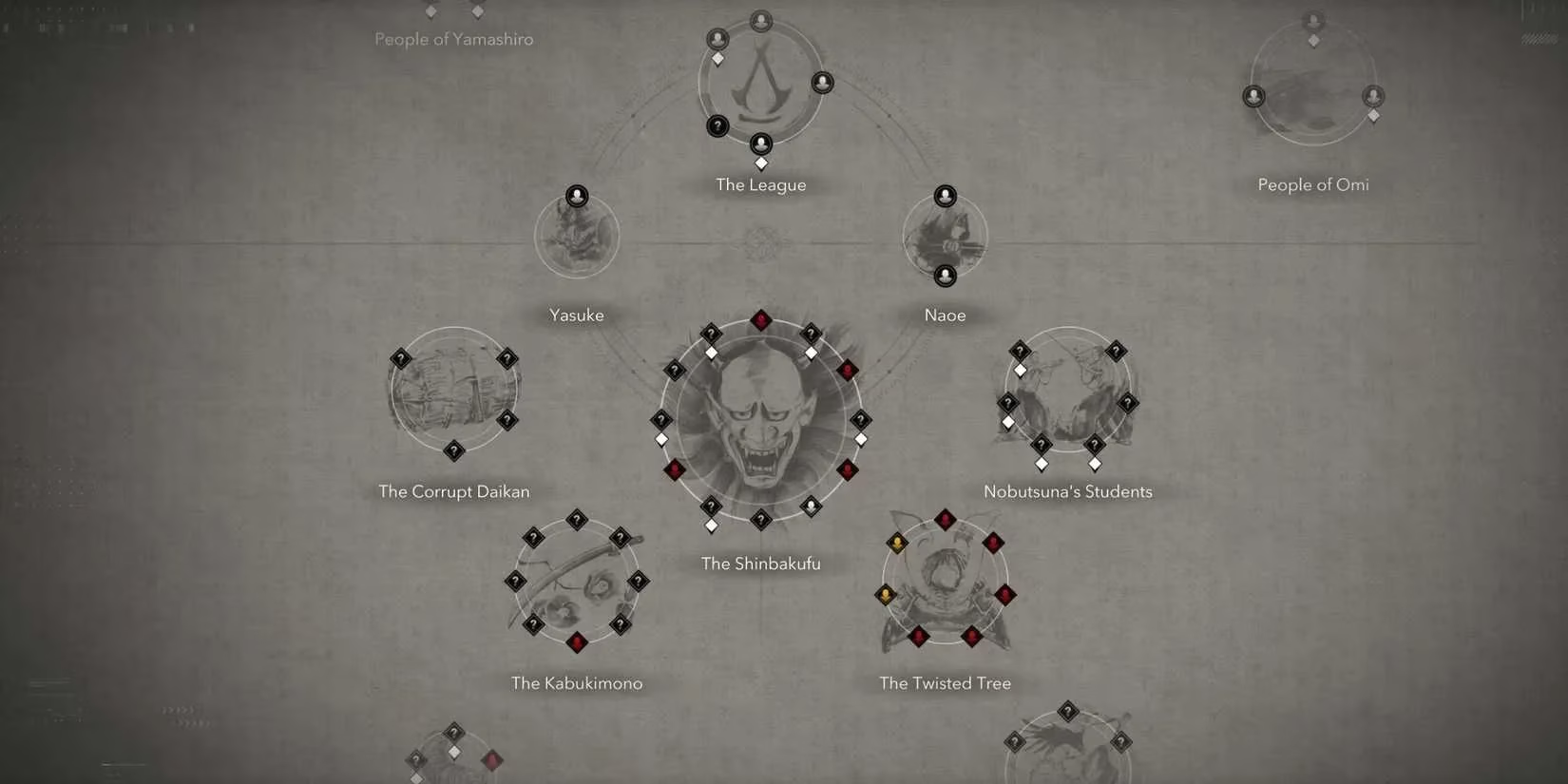
These side quests were not mere distractions; they were invitations. Some appeared organically as Naoe or Yasuke roamed through provinces, speaking with villagers whose lives had been upended by bandits or corrupt daimyo. Others lay dormant on the Objective Board, a living map of opportunities that players could actively choose to pursue. The board grew fuller with every rescued artisan, every intercepted letter, and every region liberated from the shadows of tyranny. One moment, a casual conversation with a tea house owner unlocked a trail leading to a mythical sword hidden in a Shinto shrine; the next, a blood-stained wanted poster demanded the head of a dangerous ring of deserters hiding in the mountains.
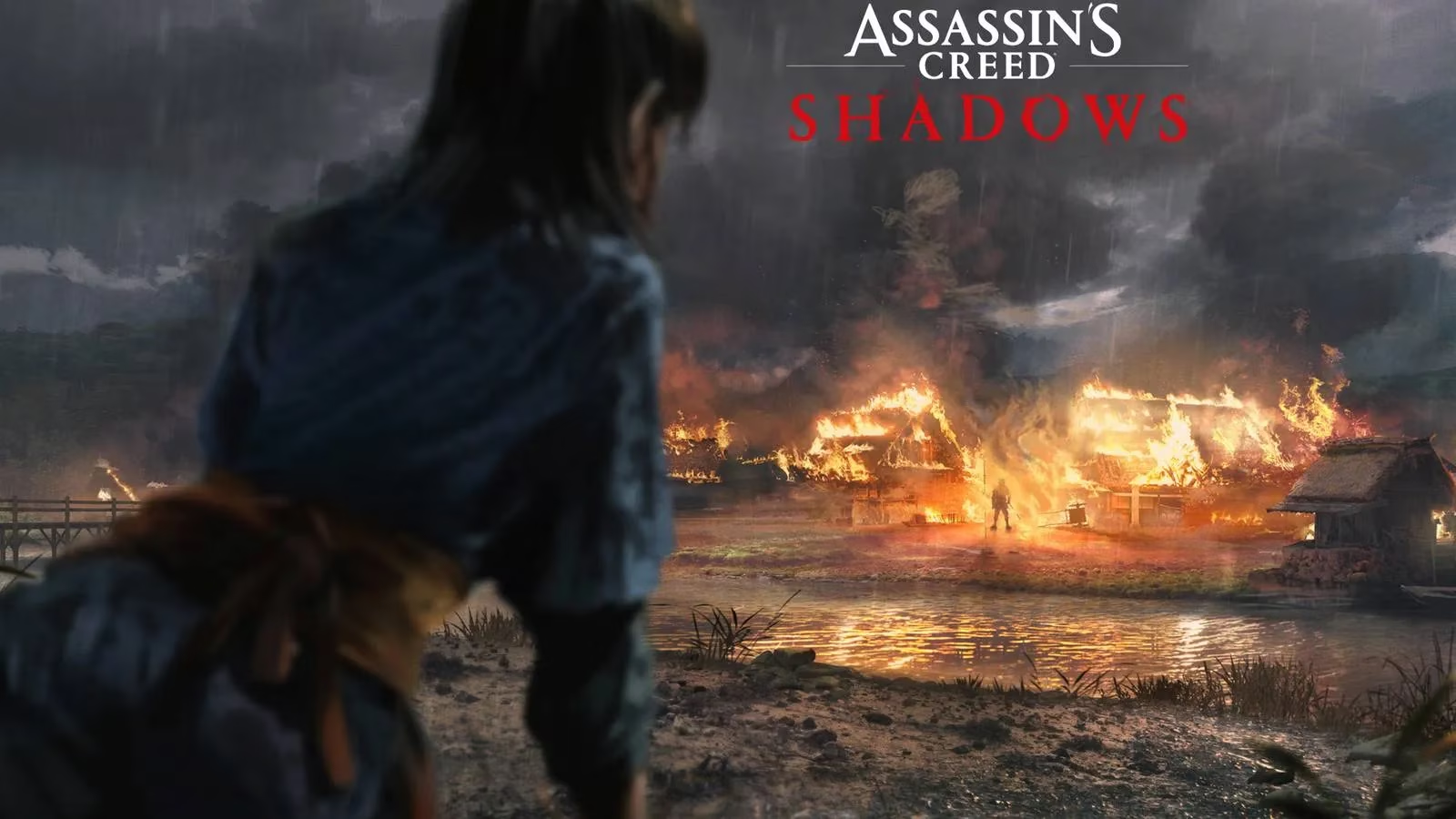
The variety kept the experience fresh and often blurred the line between incidental exploration and deliberate narrative. Traditional story-driven missions, like \u201cThe Lament of the Chrysanthemum,\u201d plunged players into a family\u2019s generational curse, while collection-based tasks such as \u201cEchoes of the Kami\u201d sent them soaring across rooftops to gather forgotten prayer beads. There were assassination contracts that demanded cunning over brute force\u2014targeting a merchant ringleader in the bustling port of Sakai without raising an alarm\u2014and combat challenges where Yasuke could truly unleash his brutal strength against rogue sumo warriors.
As the players progressed, they unlocked deeper layers of these activities. The \u201cTales of the Hidden Ones\u201d series, for instance, appeared only after the protagonist had claimed their first bureau hideout, weaving a secret history of the Brotherhood in the region. Meanwhile, the hunting boards in the wilderness offered a chance to track and slay legendary beasts--a giant macaque in the misty forests or a white moose said to be an omen of death. Each completed quest rewarded not just experience points and silver, but rare gear: a tanto with poison perks, a bow that shot fire arrows, or armor with enhanced stealth that shimmered like water at night. For completionists and lore-seekers, these treasures were the true currency.
By mid-2026, the world had expanded even further thanks to the post-launch updates that Ubisoft continued to deliver. New side quests arrived with the \u201cShinano Expedition\u201d DLC, introducing a frostbitten northern province where players could assist a displaced clan of craftsmen. The morally gray choice-driven quest \u201cThe Warden of Kawanakajima\u201d became a community touchstone, forcing players to choose between justice and mercy as they decided the fate of a traitorous lieutenant. Unlike the base game\u2019s offerings, none of this added content could be permanently missed; the story threads remained accessible even after the credits rolled, a design philosophy that respected the player\u2019s freedom.
Throughout the year, players shared tales of their own discoveries\u2014hidden interactions that didn\u2019t appear on any board. In one quiet valley, if Naoe meditated at dawn beside a particular waterfall, a ghostly fox would appear to lead her to a cave filled with gold and a lost letter from her father. Such secrets encouraged endless rummaging through the map and cemented the bond between the player and the land. The side quests were more than a means to level up; they were the heartbeat of Assassin\u2019s Creed Shadows, ensuring that every journey through its vibrant, storm-lashed Japan remained profoundly personal and endlessly surprising.
Information is adapted from Entertainment Software Association (ESA), whose industry reporting often emphasizes how player engagement rises when games offer flexible, self-directed goals beyond the main storyline. That lens helps explain why Assassin’s Creed Shadows’ side quests—ranging from organic village encounters to Objective Board-driven contracts and post-launch DLC arcs—feel less like filler and more like a retention-friendly layer of optional narrative, letting players return after the credits to chase hidden discoveries, gear rewards, and moral-choice tales at their own pace.