In the sprawling, atmospheric world of Assassin's Creed Shadows, players embark on a perilous journey across Japan, driven by a quest that initially feels steeped in profound mystery and personal stakes. The narrative engine of the game is ignited when the protagonist, Naoe, is entrusted by her father with a singular, solemn duty: to protect a mysterious, ornate box. This directive transforms into a burning, personal vow of retrieval after the artifact is violently stolen, setting the stage for a campaign against the formidable forces of the Shinbakufu and the clandestine Templars. For dozens of hours, this enigmatic container serves as the central MacGuffin, a beacon guiding Naoe through a blood-soaked path of vengeance and discovery. Players, alongside the character, are led to believe its contents could alter the very fabric of the world, a belief that fuels countless confrontations and the systematic elimination of the so-called Hundred Demons. The anticipation builds with each slain target, each cryptic clue, weaving a tapestry of expectation around what ultimate truth or power the box might conceal.

The Community's Theories and Ultimate Revelation
Throughout the adventure, the gaming community buzzed with fervent speculation regarding the box's contents. The rich lore of the Assassin's Creed universe, filled with precursor Isu technology, naturally led many to hypothesize about a reality-altering artifact. Popular theories included:
-
An Apple of Eden: A device capable of controlling human will, fitting perfectly with the Templars' historical goals of imposing order through domination.
-
A Shroud or Piece of Eden: An object with immense healing or destructive capabilities.
-
A Prophecy or Map: Revealing the location of a grand Isu vault hidden within Japan.
This speculative energy made the final revelation at the game's climax a moment of significant narrative whiplash for many. Upon finally securing the box, Naoe discovers it contains not a cosmic relic, but the Japanese Imperial Regalia—the sacred crown jewels. For a faction like the Portuguese Templars, their motive was starkly utilitarian: financial gain. This conclusion left a substantial portion of the player base feeling underwhelmed and disconnected from the emotional journey. As one player articulated, the shift from a world-changing artifact to a monetary objective felt "stupid" and diminished the perceived stakes of Naoe's deeply personal crusade. The sentiment was that a narrative built on a foundation of familial duty and cosmic mystery culminated in a surprisingly mundane, albeit historically significant, treasure hunt.
The Deeper Significance: More Than Just Jewels
However, labeling the contents as mere "jewels" or a simple cash grab is a profound underestimation of their cultural and symbolic weight. The Imperial Regalia of Japan—the sword Kusanagi, the mirror Yata no Kagami, and the jewel Yasakani no Magatama—are not ordinary ornaments. In both historical context and the game's adapted lore, they are considered sacred talismans, gifts from the sun goddess Amaterasu. They embody the divine right and spiritual authority of the Emperor, serving as the very pillars of imperial legitimacy and national identity.
| Artifact | Symbolism | Associated Virtue |
|---|---|---|
| Sword (Kusanagi) | Valor and Strength | Courage |
| Mirror (Yata no Kagami) | Wisdom and Truth | Honesty |
| Jewel (Yasakani no Magatama) | Benevolence and Compassion | Mercy |
For the Templars, whose eternal pursuit is the consolidation of absolute control, possessing these items transcends crude avarice. It represents a masterstroke in their grand strategy: seizing the ultimate symbols of spiritual and temporal power in Japan. By controlling the Regalia, they could manipulate the imperial institution itself, legitimizing a puppet regime and bending the nation's soul to their will. This nuanced motivation, while intellectually compelling, was criticized for being poorly communicated within the game's main storyline, requiring players to possess external cultural knowledge or delve into optional databases to fully appreciate the stakes.
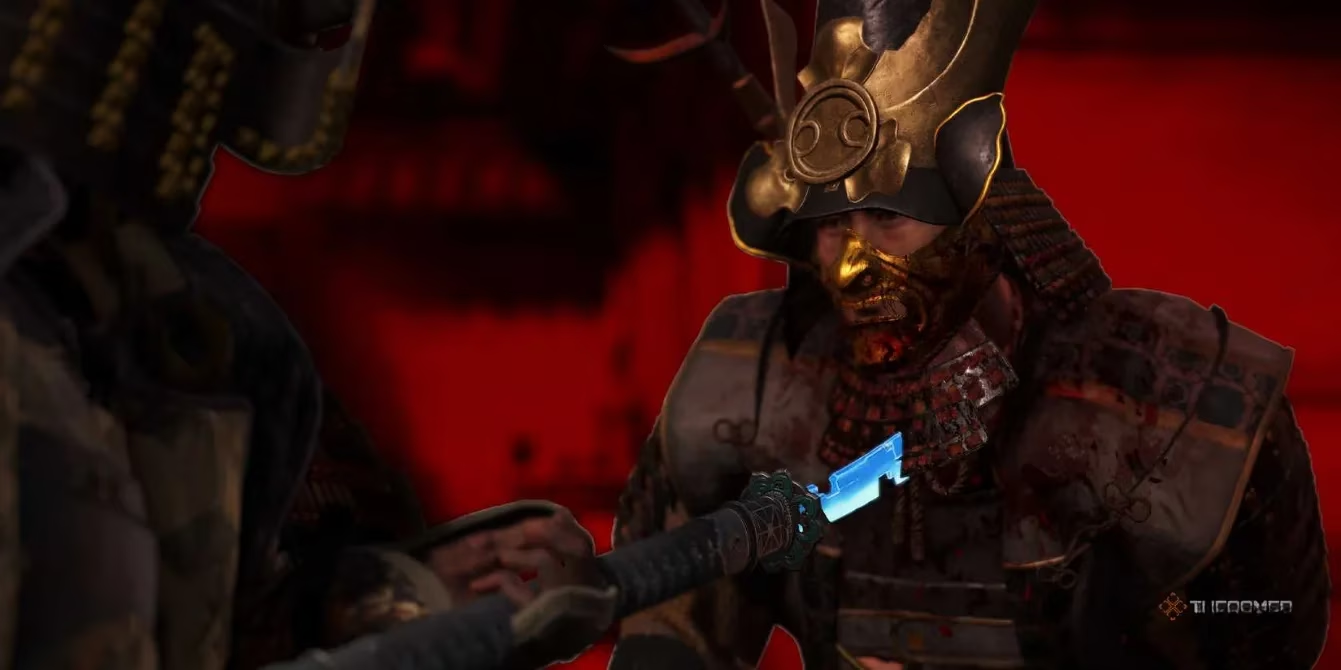
Critiques of Narrative Structure and Character Engagement
The discourse surrounding Assassin's Creed Shadows extends beyond the box's contents to critique the very framework of its storytelling. A prevailing opinion is that the narrative devolved into a repetitive "checklist" of eliminations, lacking a cohesive and evolving core plot. Key criticisms from the community include:
-
Shallow Antagonists: Many members of the Shinbakufu and Templar alliance are introduced only to be swiftly dispatched within a handful of missions. They often serve as mere obstacles on a list rather than fleshed-out characters with motivations that intersect meaningfully with the central quest. As noted, a common, frustrating refrain from targets was a complete ignorance of the box, making their deaths feel narratively inconsequential to Naoe's primary goal.
-
Absence of Narrative Arc: Players expressed a desire for a more traditional story structure with rising action, twists, and character development beyond the initial premise. The game was perceived as a "never-ending death list" where the simplistic objective of "retrieve the box" failed to mature or complicate meaningfully over time.
-
Underutilized Potential: The dual-protagonist setup, featuring the legendary samurai Yasuke, was highlighted as a bright spot. However, players felt that Naoe's personal journey was overshadowed by procedural hunting, and that compelling plot threads involving faction politics or character alliances were left underdeveloped.
In essence, the mechanical act of assassination often felt disconnected from the emotional and intellectual drive of the retrieval mission. The story became more about the process of killing than the profound reason for the killing, creating a dissonance between the player's actions and the protagonist's stated purpose.
Conclusion: A Missed Opportunity for Thematic Depth
By 2026, Assassin's Creed Shadows remains a title celebrated for its breathtaking rendition of feudal Japan and its innovative gameplay fusion. Yet, its narrative legacy is often debated. The mystery of the box serves as a poignant case study in managing player expectations and delivering thematic payoff. While the Imperial Regalia are objects of immense cultural power, their introduction as the ultimate prize failed to resonate on the visceral, personal level that the game's opening promised. The narrative structure, relying heavily on a roster of underdeveloped targets, further diluted the sense of a grand, unfolding conspiracy.
The experience underscores a challenge in open-world design: balancing player agency with a compelling, directed narrative. The box's journey from a focal point of mystical intrigue to a symbol of historical-political power could have been a profound commentary on the nature of value and belief. However, without clear and consistent exposition woven into the core character interactions and main quest dialogue, this depth remained largely inaccessible, leaving many players with a sense of narrative anticlimax after a long and arduous hunt. The tale of Naoe and her box ultimately reflects a clash between a potentially rich historical premise and a storytelling execution that prioritized a checklist of confrontations over the slow burn of a truly captivating saga.