When I first fired up Assassin’s Creed Shadows back in 2025, I expected to be blown away by samurai steel, sneaky shinobi antics, and a cultural clash of epic proportions. What I didn’t expect was to develop a borderline academic obsession with a background character sporting a quill and a very un-Japanese hat. That man is Luís Fróis, a Portuguese Jesuit whose musty letters and journals not only birthed a good chunk of our knowledge about Yasuke but also gave me – a humble gamer – a crash course in 16th-century gossip, political maneuvering, and missionary shade-throwing. And honestly? I’m here for it.
So who was this guy, and why does he deserve more than a passing glance while you’re busy parkouring across Azuchi Castle? Buckle up, because Fróis’s real-life story is weirder and more fascinating than any Order of the Ancients subplot.
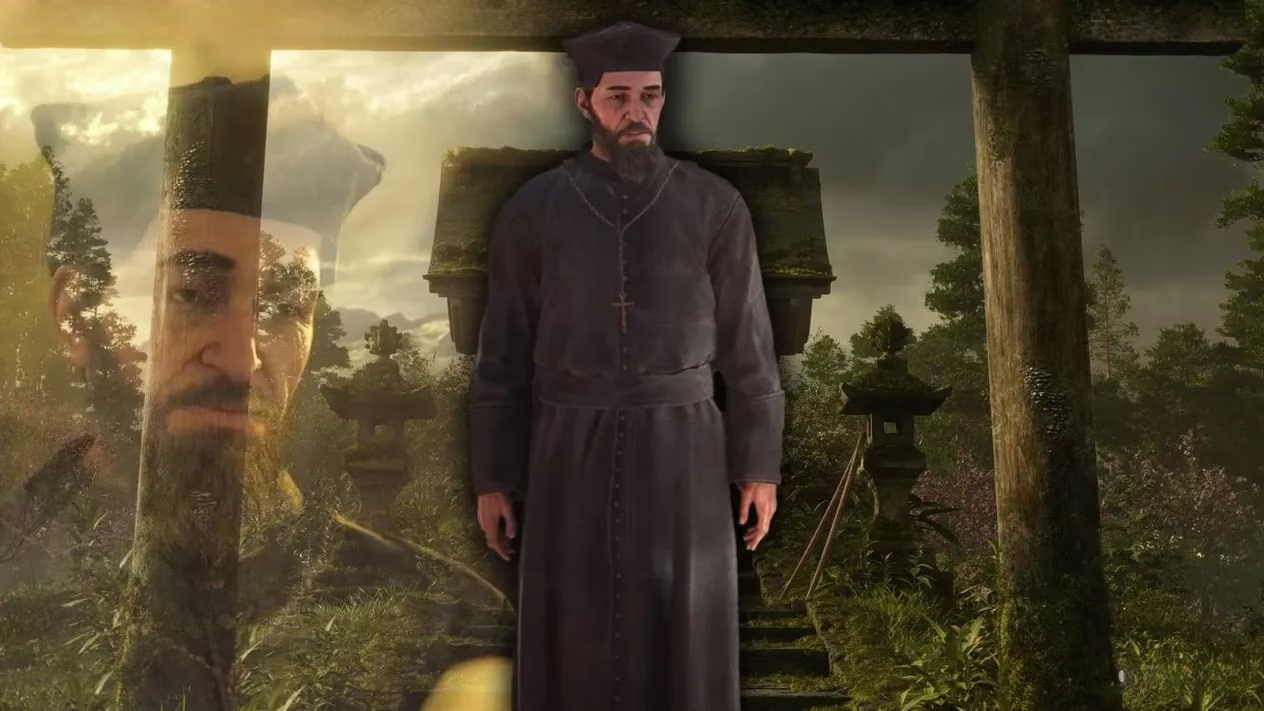
From Lisbon with a Vow
Born in 1532 in Lisbon, Luís Fróis was essentially a courtly kid, soaking up an education in the royal palace of King John III up until his mid-teens. Imagine hanging out with royalty, learning the classics, and then deciding the best career move was to join a brand-new, hyper-devout organization called the Society of Jesus (the Jesuits) – founded just eight years earlier. Teenage rebellion, 16th-century style. Fróis didn’t just take a vow of poverty, chastity, and obedience; he signed up to be shipped halfway across the globe to spread the Word. 🚢
His first stop? Portuguese India, where he crossed paths with the legendary missionary Francis Xavier. But apparently, a routine posting in Goa wasn’t spicy enough. By 1563, Fróis had completed his priestly training – with a specialization in being dangerously eloquent – and received the assignment that would define his life: Japan.
The Ultimate Culture Shock
Frois arrived in a fractured land torn apart by the Sengoku period. Warlords (daimyos) snarled at each other, clan conflicts were messier than a multiplayer lobby, and the country was basically a giant tactical map waiting for someone to conquer it. Into this chaos waltzed a Portuguese wordsmith with zero combat skills but a surplus of diplomatic charm. He eventually wound up in Kyoto, where he managed to meet both the shogun Ashikaga Yoshiteru and the rising star Oda Nobunaga.
Now, Nobunaga was the kind of dude who would probably speedrun any grand strategy game while juggling firearms and mass-producing great-axes. Yet Fróis – a foreign priest with a funny accent and an even funnier hat – somehow became a trusted ally. Nobunaga gave the Jesuits free rein to proselytize, build churches, and generally hang around. Why? Because Nobunaga had a thing for Western tech, Christian artifacts, and honestly, probably just enjoyed trolling the Buddhist establishment. Fróis was the perfect pawn – and he knew it.
The Accidental Historian Who Saved Yasuke from Obscurity
In 1583, Fróis’s superiors issued an order that would earn him a spot in every future academic bibliography: start recording everything. And man, did he deliver. His multi-volume work, later titled History of Japan, became a sprawling, detailed account of Jesuit missions and – critically – the broader political and social happenings of the era. Without Fróis’s obsessive journaling, modern scholars would have far less insight into the Sengoku madness.
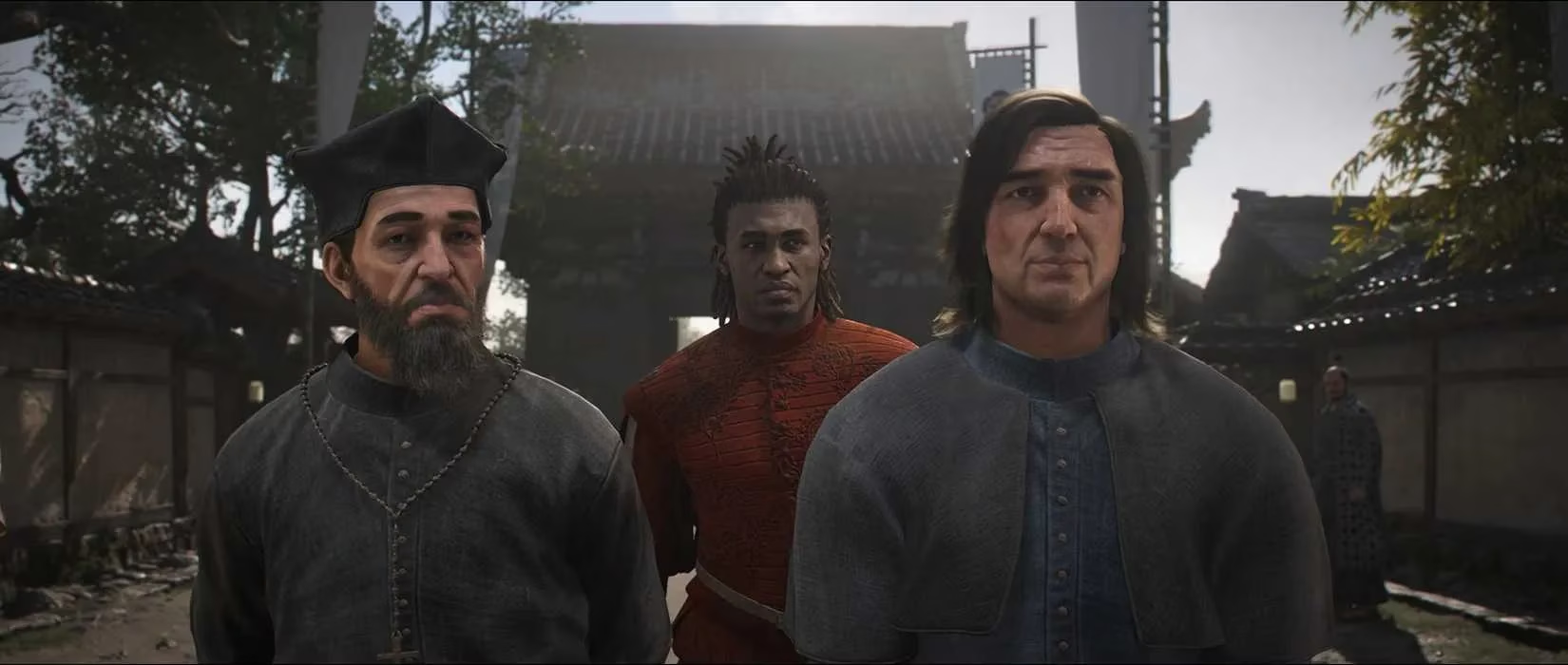
But here’s the kicker for Assassin’s Creed fans: the infamously cryptic Yasuke owes his historical footprint almost entirely to Fróis. In 1581, Yasuke accompanied Fróis and his Italian colleague Alessandro Valignano to an audience with Nobunaga. The warlord, upon seeing the towering African man, demanded Valignano hand him over. That single, game-changing meeting? It’s the opening cinematic of Shadows, and it comes straight from Fróis’s letters. You could say Fróis was the OG Yasuke chronicler, forever shaping the legacy of Japan’s first foreign-born samurai. Without him, Yasuke might have been a footnote in some dusty Nagasaki ledger.
So How Does the Game Stack Up?
In true Ubisoft fashion, Shadows takes Fróis’s historical breadcrumbs and bakes a whole loaf of narrative intrigue. The game’s Fróis is a sharp-dressed, sharp-tongued diplomat who isn’t just handing out Bibles – he’s navigating the hidden war between Templars (or whatever they’re calling the baddies this loop) and Assassins. I won’t spoil exactly how his allegiances twist, but let’s just say the man who once recorded doge-y tax policies for posterity now might be recording your blade count for the Pope.
What tickles me is how the game mirrors the historical ambiguity beautifully. Was Fróis simply a pious missionary, or did he play both sides like a Renaissance string quartet? History shows he was a pragmatic survivor – he navigated Nobunaga’s whims, Hideyoshi’s later suspicion, and the upheavals of a nation in flux. The game dials that moral murkiness up to 11. I half-expected a side quest titled "Frois’s Scathing Letter to the Shogun About Tea Ceremony Etiquette." ☕
The Legacy: More Than a Quest Giver
Frois died in Nagasaki in July 1597, but his paper trail lived on. Today, historians still treat his History of Japan like a treasure map to the period. And for us players, his cameo in Shadows is a delightful Easter egg for anyone who googled "Wait, was that Portuguese guy a real dude?" after playing the tutorial.
Let’s be real: historical accuracy in a game that lets you eagle-dive into a bale of rice is always going to be flexible. Yet it’s characters like Luís Fróis – grounded, contradictory, and absurdly well-traveled – that remind me why I love this franchise. It’s not just about stabbing Templars; it’s about stumbling into the messy, hilarious, true-to-life tapestry that connects a boy from Lisbon, a warlord in Nagoya, and a mysterious African bodyguard who became a legend. So next time you sprint past a nondescript missionary in Shadows, stop and pay respects. Without that dude’s feather pen, you might have no Yasuke to play 😉