For years, the narrative thread connecting the sprawling historical tales of Assassin's Creed was a fragile one, often criticized and neglected. After the impactful death of Desmond Miles, the franchise struggled to find a modern-day anchor that players could truly invest in. The introduction of Layla Hassan in Assassin's Creed Origins felt like a turning point—a dedicated protagonist whose journey in the Animus was directly tied to a larger, contemporary war between Assassins and Templars. She provided purpose, making the genetic memories feel consequential to a living, breathing conflict. Yet, with the release of Assassin's Creed Shadows, that hard-won momentum seems to have evaporated, leaving fans to wonder if the modern-day story has been abandoned once more.
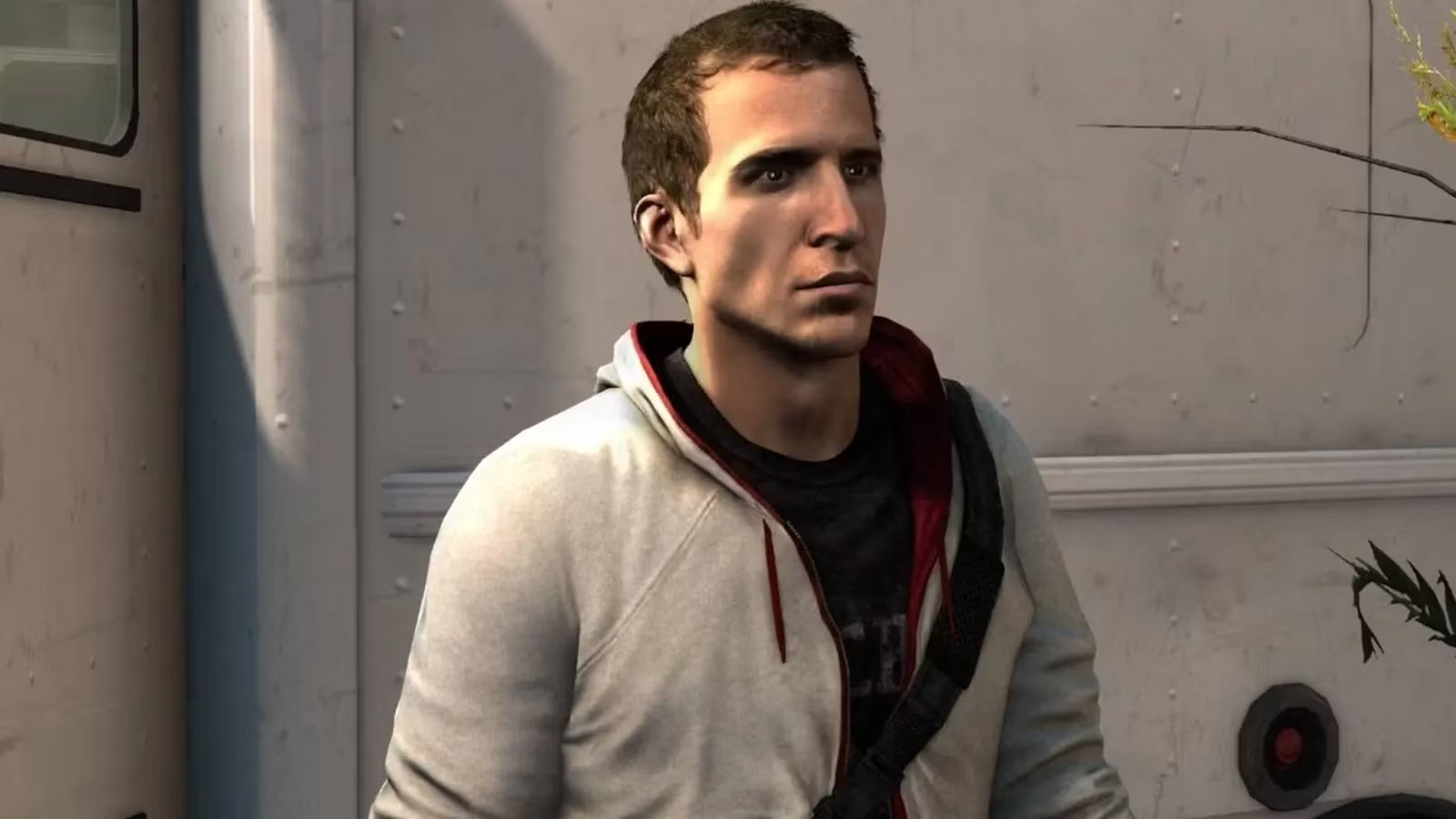
The disappointment within the community is palpable and vocal. On forums like r/AssassinsCreed, players have expressed a deep sense of frustration. One user, Visual_Test5141, captured the prevailing sentiment perfectly: "The modern day of Shadows has really disappointed me. I've just felt so uninterested... because it's so boring. The personal connection that was felt with Desmond and Layla made it so interesting and gave the game a purpose." This loss of a tangible, emotional link is a recurring theme. Another player, Assassiiinuss, pointed to the whiplash from Valhalla, which had finally begun developing modern-day characters and plot threads again, only for Shadows to seemingly discard that progress. "It's hard to care about something when I'm 90 percent sure it'll just be abandoned again immediately," they lamented. The shift to interacting with what feels like an Animus simulation rather than a real person has further alienated players who crave a character to root for in the present.
This frustration stems from a stark contrast in presentation. In Shadows, the modern-day narrative has been relegated to optional collectibles. Animus rifts scattered across the map offer only static visuals with audio logs, while crucial story beats are buried within text files on the game's battlepass menu. It's a far cry from the playable, character-driven segments featuring Layla or, before her, Desmond. The contemporary war feels like a distant footnote, an afterthought to the rich historical simulation of feudal Japan. For some players, this shift in focus back to the past is welcome, a return to the series' core appeal. For others, it feels like a betrayal of the overarching mythos that gave the franchise its unique identity.
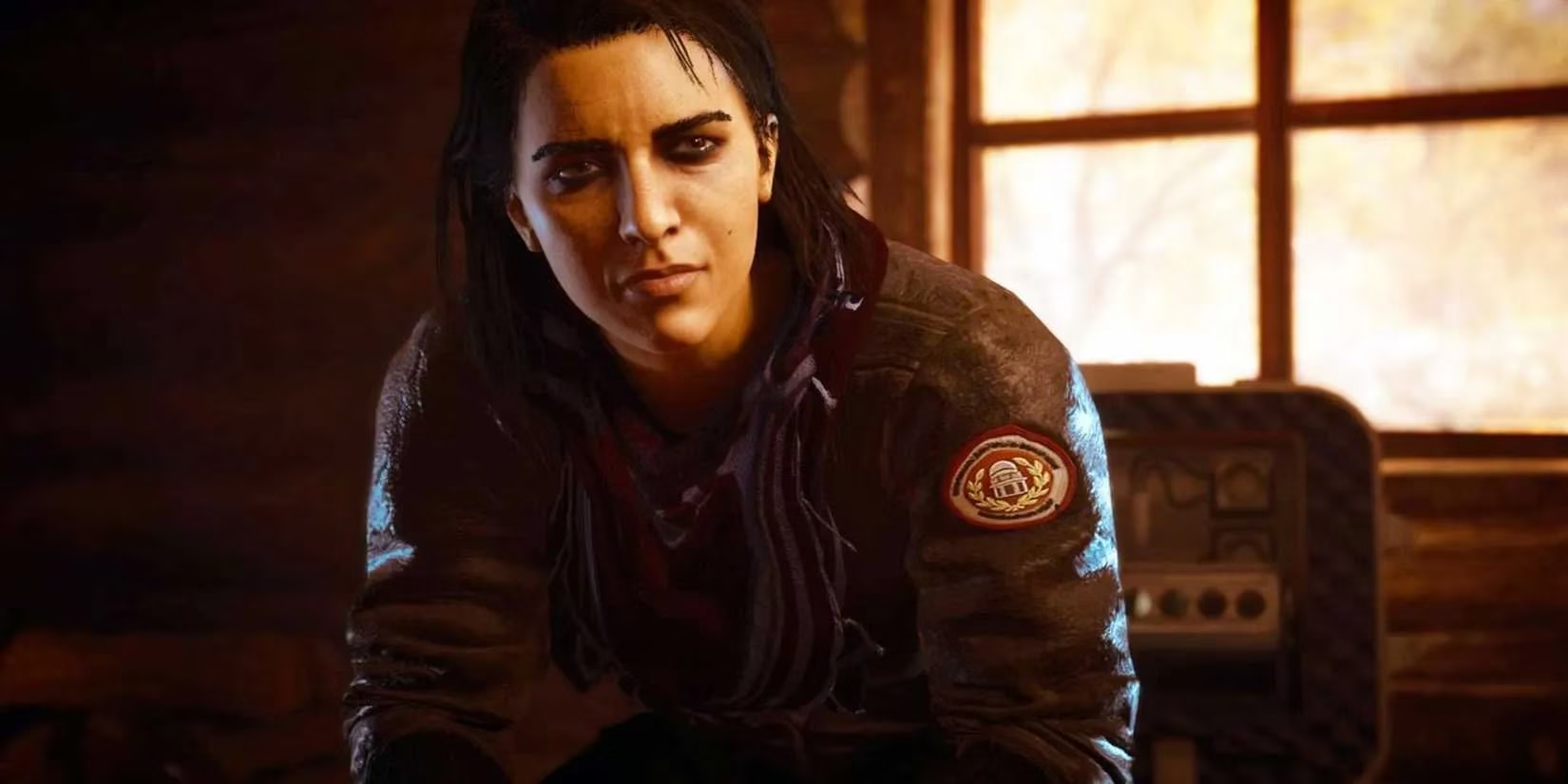
To understand why this step back is so jarring, we must look at the ambitious setup left by Assassin's Creed Valhalla. That game delivered seismic revelations for the modern-day arc:
-
Desmond's Fate: He did not truly die. Transformed into a being known as the "Reader," he now exists within the Grey—a spiritual-technological hybrid afterlife.
-
Layla's Choice: After the events of Valhalla, Layla chose to remain in the Grey with Desmond. Together, they are working to prevent a catastrophic, world-ending disaster.
-
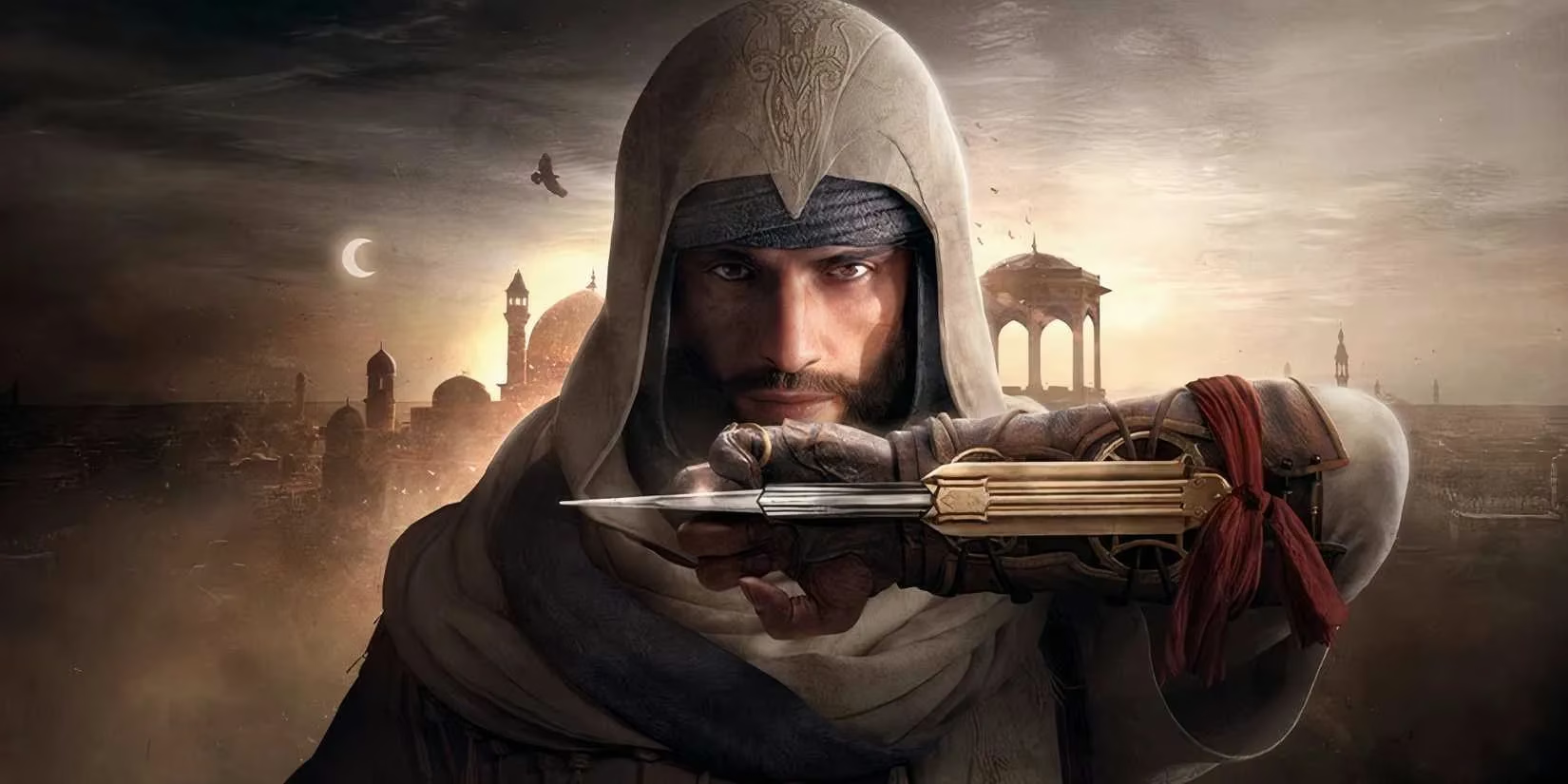
The Rise of Basim: With Layla's physical body vacated, the ancient Isu reincarnation Basim (who is essentially the trickster god Loki) used the Staff of Hermes Trismegistus to restore himself. He emerged as the new modern-day protagonist, vowing to find his lost children and continue the fight against the Templars from the shadows.
This was a bold new direction. After years of uncertainty, players were finally given a clear, powerful protagonist in Basim, a being with millennia of history and a deeply personal mission that intertwined with the Isu lore. The stage was set for a thrilling continuation, making the minimalist approach of Shadows all the more confusing.
So, where is the story headed? Shadows itself offers cryptic clues through its text logs, pointing not to Basim's immediate future, but to a world fifty years from our present day, in the 2070s. The logs describe a dystopian future shaped by two forces:
-
Rampant AI Integration: Artificial intelligence has become ubiquitous in society.
-
Climate Catastrophe: Unchecked climate change has led to deadly "heat curfews" and massive power failures that wipe out populations.
Into this bleak future steps a new potential protagonist: Joel Eastman, a young British man investigating his late father's work. The logs detail how, despite the efforts of William Miles, Desmond, Layla, and their allies, the Assassin Brotherhood has been decimated—"scattered [and] stripped to the bone." However, a small cell, including Eastman, is mounting a new offensive. Their first major act is the kidnapping of a Templar scientist, Dr. Muller, who is working on a mysterious initiative called "Project Mnemosyne" (named after the Greek goddess of memory).
This setup presents a major fork in the road for the narrative. The community is now divided on the best path forward:
Path A: The Basim Continuation
Many believe the story should pick up directly from Valhalla's climax. Playing as the ancient, cunning Basim offers unparalleled narrative potential. His quest is deeply personal (finding his family) and cosmically significant (as an Isu, his actions could reshape the world). This path promises a direct connection to the series' deepest lore.
-
Pros: Direct continuity, rich lore connections, a complex and powerful protagonist.
-
Cons: Risks alienating players unfamiliar with the Valhalla/Mirage arc.
Path B: The Joel Eastman Future Jump
Shadows hints that Joel Eastman is being groomed as Layla's successor, effectively sidestepping Basim. A soft reboot set in a near-future dystopia could revitalize the modern-day story, making it feel urgent and relevant to a 2026 audience. Themes of climate collapse and AI dominance are strikingly contemporary.
-
Pros: Fresh start, timely themes, can attract new players.
-
Cons: Abandons the compelling Basim thread, risks feeling disconnected from the established timeline.
All eyes now turn to the next major title, Assassin's Creed Hexe. With acclaimed writer Darby McDevitt returning, there is fervent hope that the modern-day story will receive the attention it deserves. The big question remains: will Hexe follow Basim's journey in the immediate aftermath of Valhalla, or will it leap forward to embrace the dystopian future and Joel Eastman teased in Shadows? The community holds its breath, yearning for a return to a modern-day narrative with the heart and high stakes that once made it indispensable. Perhaps this period of uncertainty is necessary—a recalibration before the Brotherhood rises once more. Only time, and the decisions of the narrative team, will tell if the pulse of the present-day conflict can be restored, or if it will fade permanently into the static of an abandoned audio log.