I still remember the weight of that moment, sitting alone in my dimly lit room on a rainy afternoon in 2026. Assassin’s Creed Shadows had already taken me on an emotional ride through Feudal Japan, but nothing prepared me for the final confrontation between Naoe and the legendary samurai Hattori Hanzo. The screen glowed with tension as Hanzo, battered and guilt-ridden, revealed a truth that sliced right through Naoe’s heart — and mine. The man she had trusted, the ghost of her past, was the traitor who had shattered the Kakubishiba ikki. All because her mother had loved someone else.
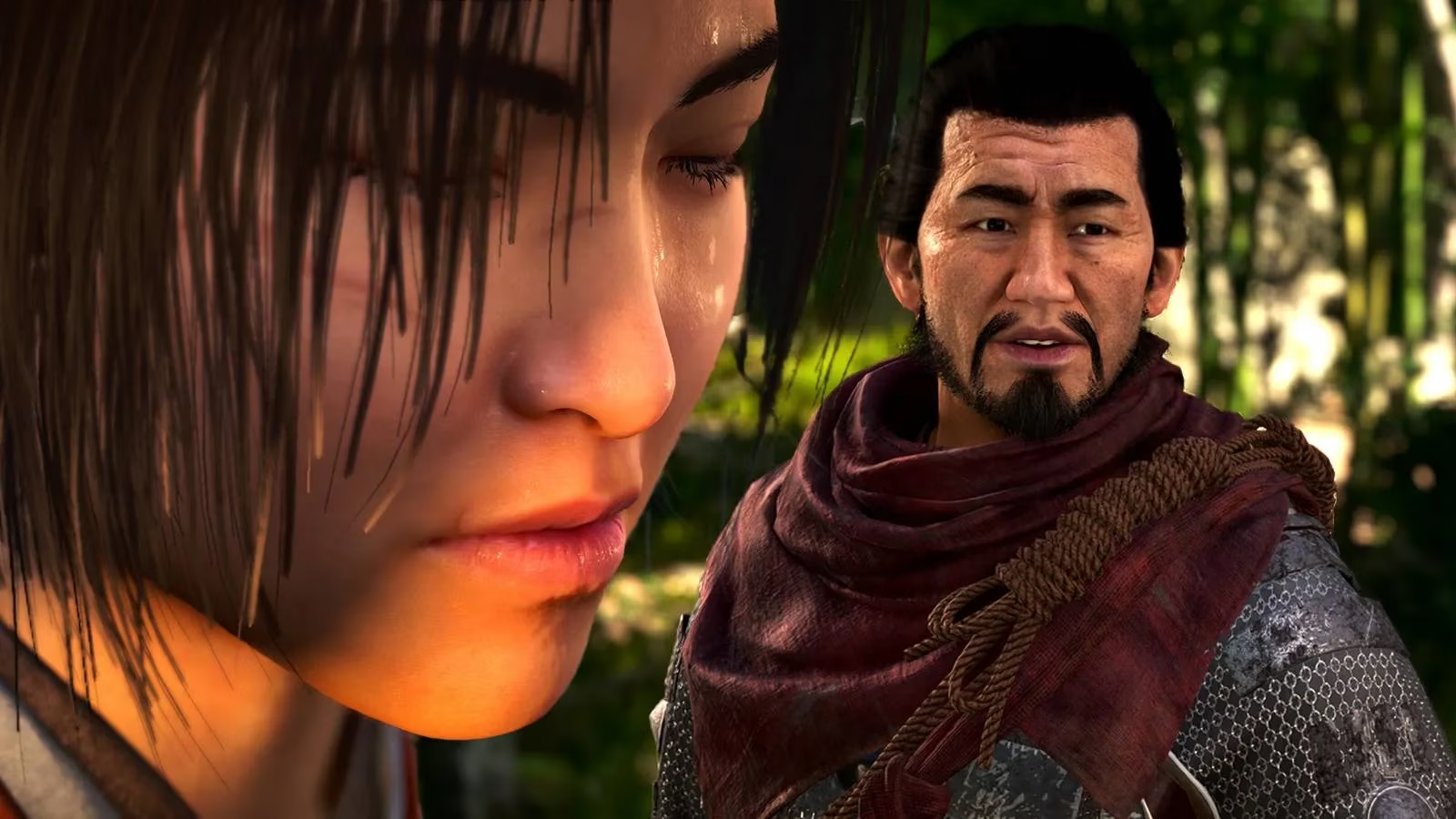
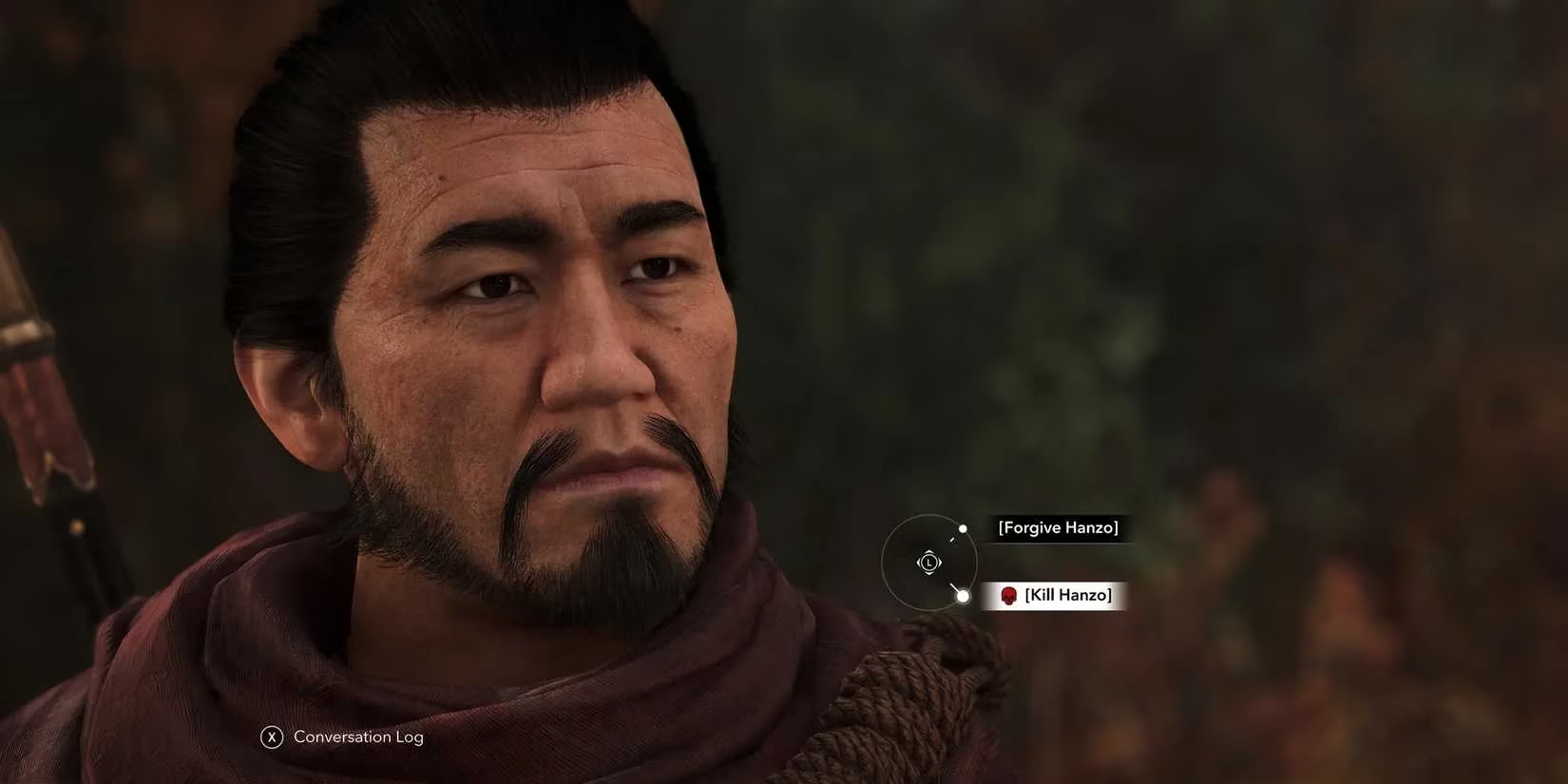
Hanzo’s voice trembled as he offered a twisted olive branch: help him find her mother, who might still be alive. I could feel Naoe’s storm inside — a hurricane of betrayal, grief, and a desperate hope. My fingers hovered over the controller. The choice popped up: Forgive or Attack. Everything I knew about forgiveness, about Junjiro’s quiet influence on Naoe, nudged me toward mercy. But I’m a gamer who craves catharsis. I wanted justice. I chose Attack.
Naoe erupted. “Enough!” she screamed, demanding justice. Hanzo didn’t flinch. He admitted he might deserve death, but begged her not to be the one to deliver it — not before they found her mother. Then the game twisted the knife deeper: a second prompt appeared. Forgive Hanzo or Kill him. My heart pounded. This was it. The fatalistic thrill won. I pressed Kill him.
The world blurred into a duel. Hattori Hanzo, the Oni Hanzo, moved like smoke. He threw bombs, darted sideways, and struck with the speed of a viper. I had to use every parry, every dodge, every ounce of shinobi patience I’d honed over hours of gameplay. It was a real challenge — far tougher than any duel I’d fought as Yasuke.
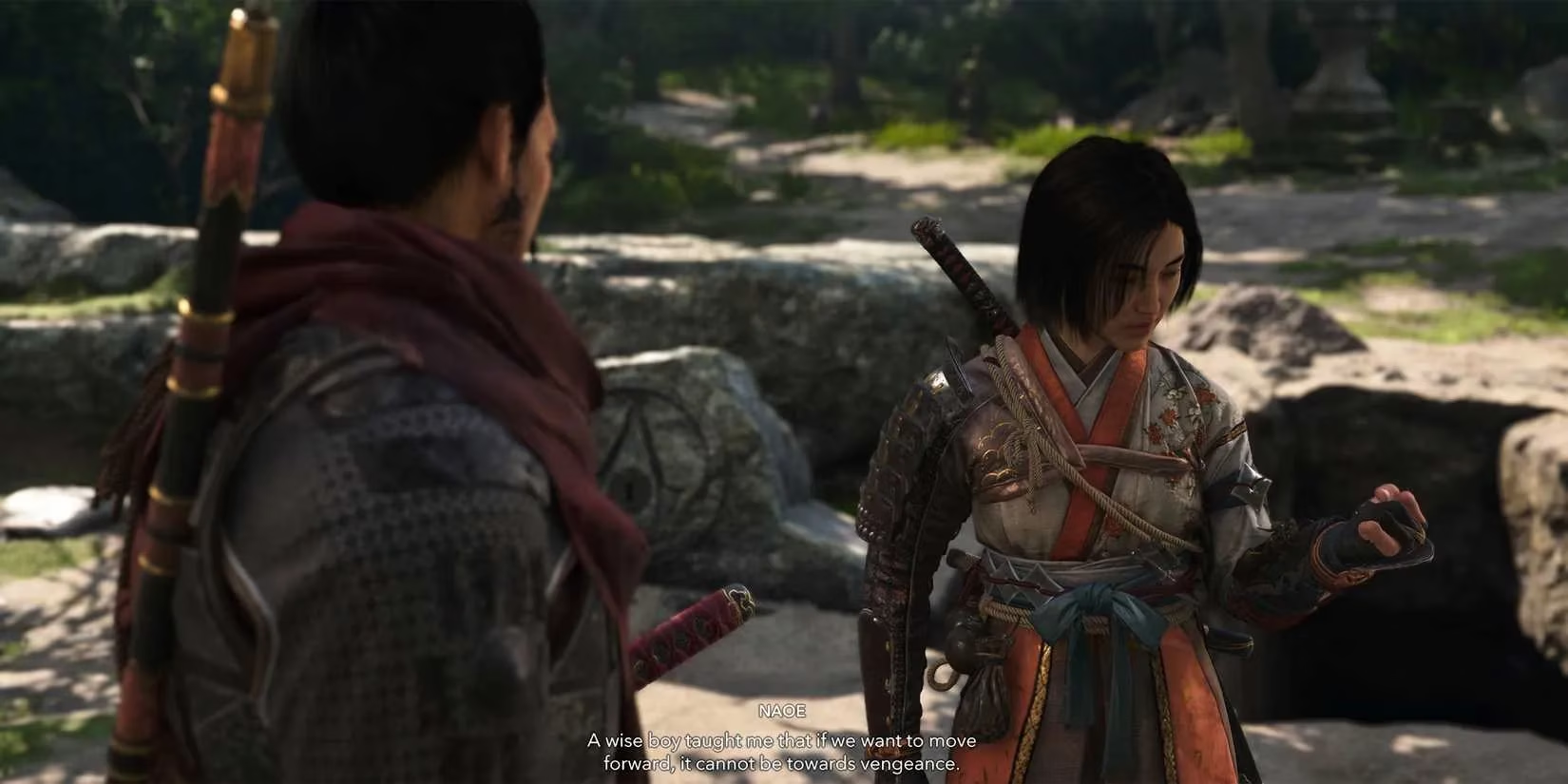
When Naoe’s blade finally found its mark, I expected a finishing blow. But she stopped. Her hidden blade retracted. Hanzo, bloodied and defeated, staggered to his feet. In that silence, I saw Naoe’s humanity break through. She offered forgiveness — not the warm kind, but a grim, conditional one. “Return to the Kakushiba ikki. Prove your intent,” she commanded. Hanzo, voice broken, promised to come whenever she called. The scene ended on a somber note, far heavier than I imagined. No triumphant fanfare. Just rain and regret.
Later, I reloaded an older save to see the other path. Choosing Forgive from the start unravels a gentler thread. Naoe reins in her vengeance, mentioning Junjiro’s silent lesson. Hanzo, almost relieved, recites a variation of the Assassin’s creed — move in darkness to serve the light. Naoe finishes it with a knowing look. He leaves, calling her the future of Japan, and she even smiles. The resolution is peaceful, even hopeful. But it lacked the raw, visceral weight of the fight.
What fascinated me most, looking back in 2026, is how Ubisoft designed these branches. There’s no extra loot for fighting Hanzo — no legendary gear, no unique trophy. The reward comes later in the epilogue, regardless of your choice. Yet, from a pure storytelling perspective, the duel route feels like the intended canon. If you disable choices via Canon Mode, the game defaults to the dramatic fight-and-forgive sequence. That’s the emotional crescendo the developers crafted for those who want the “true” narrative flow.
-
Forgiving Hanzo makes strategic sense: it’s quicker, avoids a tough battle, and delivers the exact same epilogue reward. It’s the logical roleplay path for a Naoe who values peace over personal vengeance.
-
Attacking Hanzo offers no material gain, but gifts you one of the most intense, memorable duels in the game. It’s the cathartic option — and perfectly aligns with the canon outcome.
If you’re nearing the end of Naoe’s journey in 2026, maybe revisiting the game after all this time, here’s my heartfelt advice: choose the fight. Not because it’s mechanically beneficial, but because it transforms a simple conversation into a moment you’ll remember. My fingers still tremble when I recall that duel, the way I held my breath when Naoe sheathed her blade. She didn’t kill a legendary samurai that day — and that mercy, after so much pain, felt more powerful than any assassination.
So go ahead. Let Naoe rage. Let her forgive on her own terms. Hattori Hanzo will survive, and so will you — with a story worth telling.